
Last updated October 16, 2026
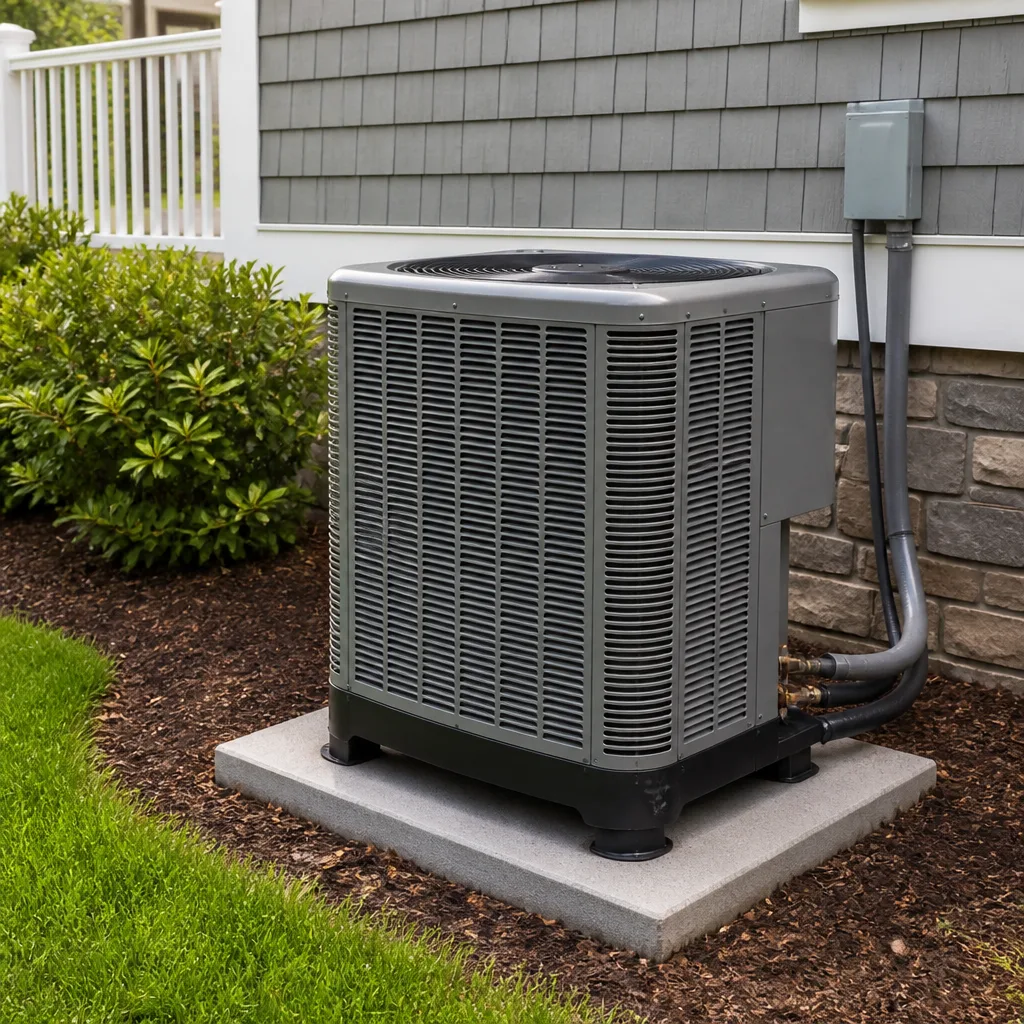 AC repair
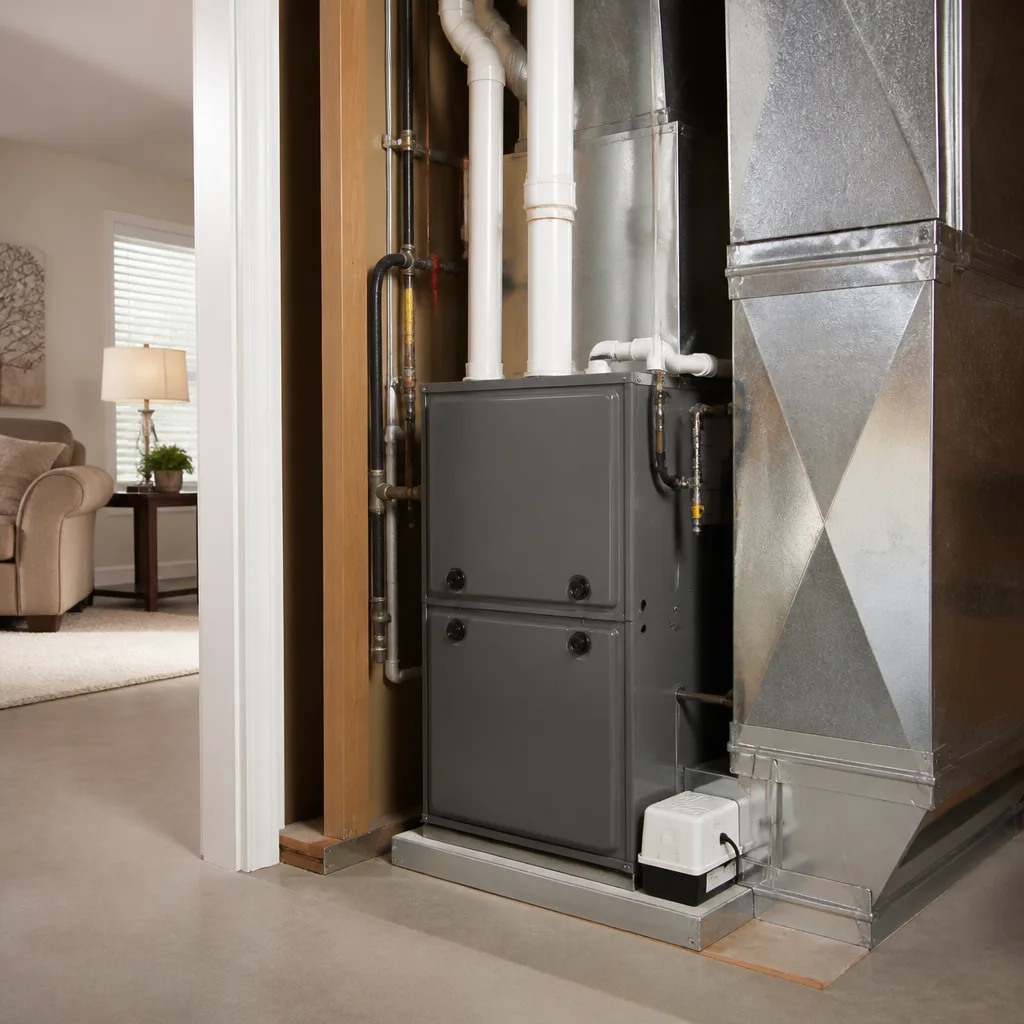 Furnace & heating
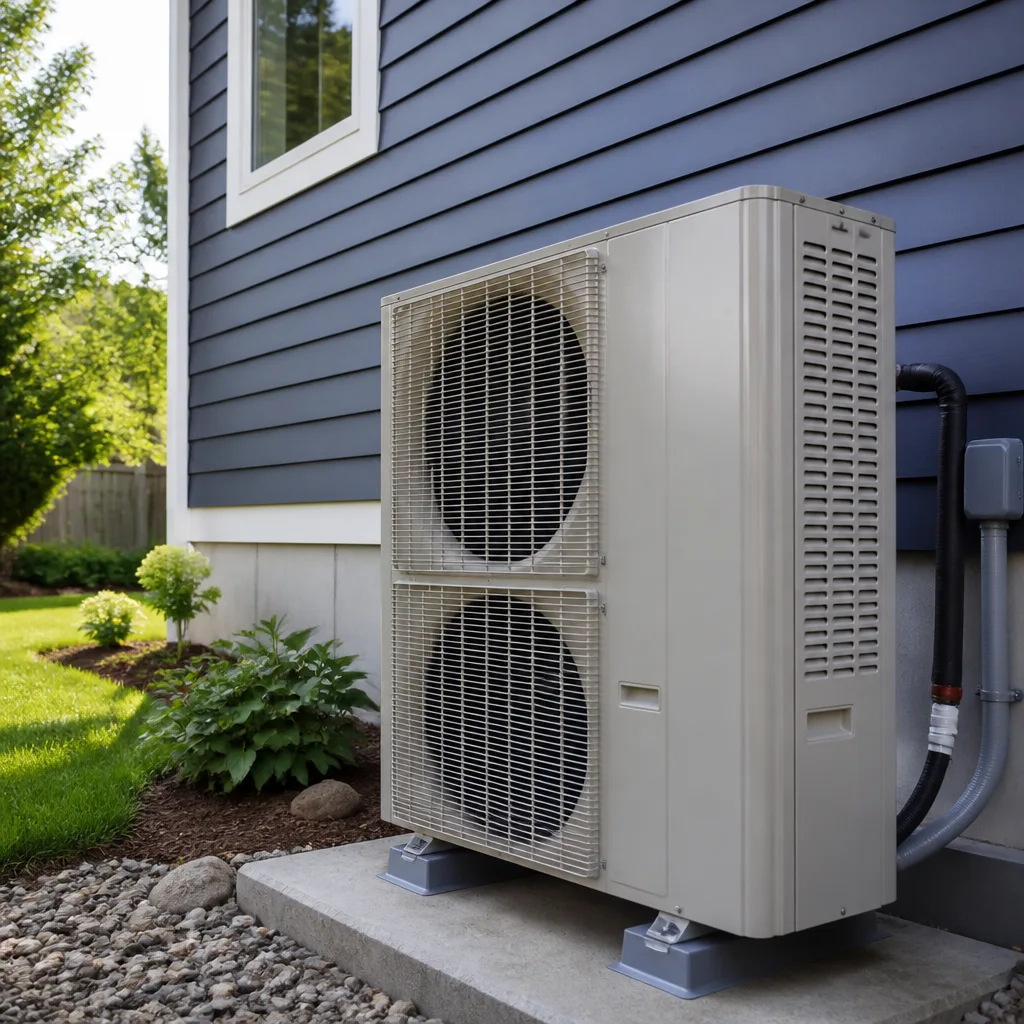 Heat pumps
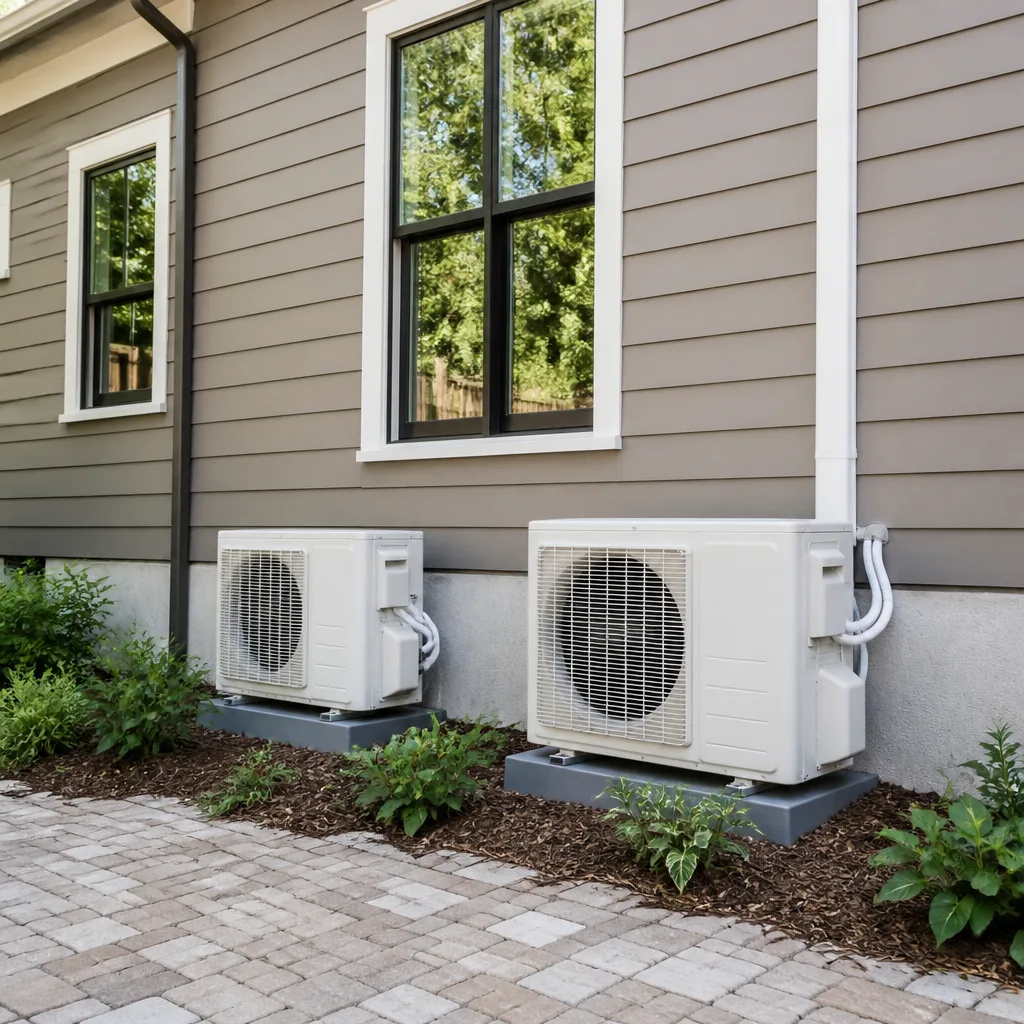 Ductless mini splits
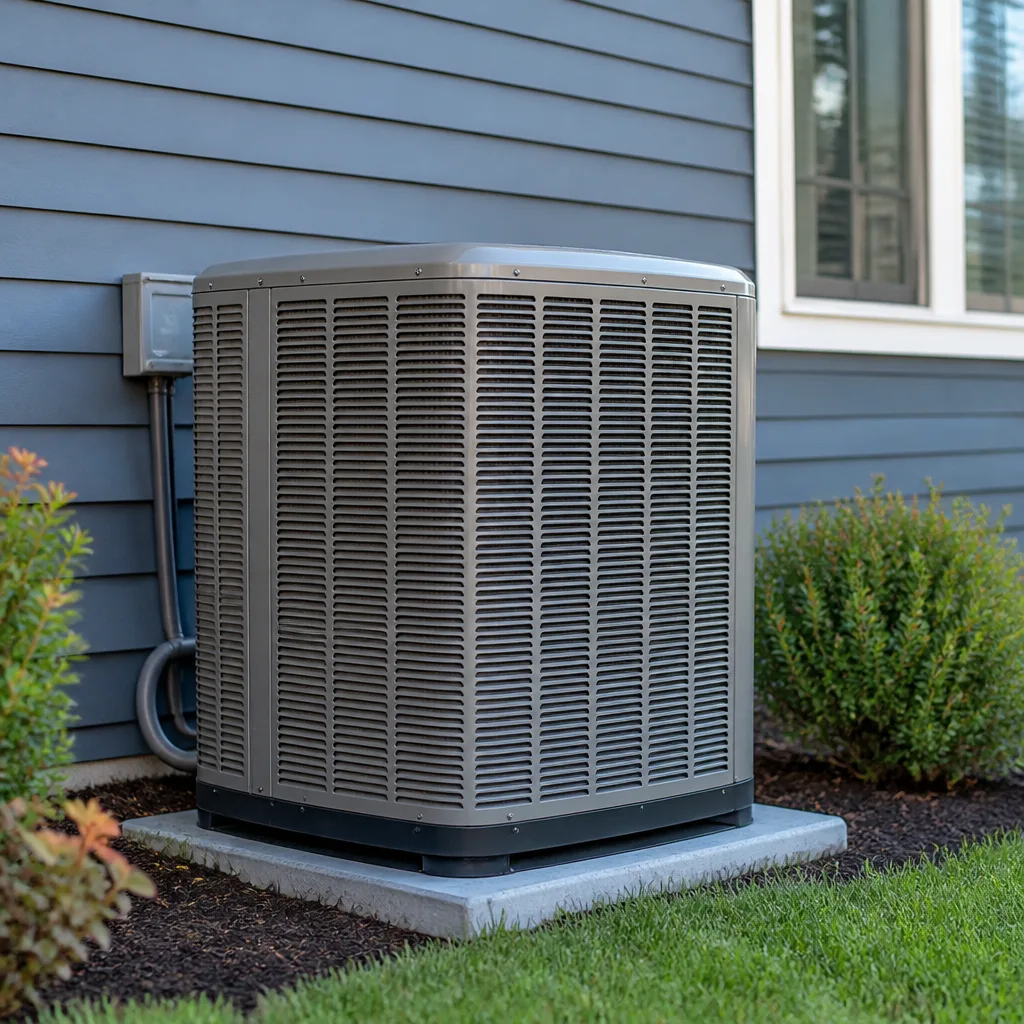 Carrier
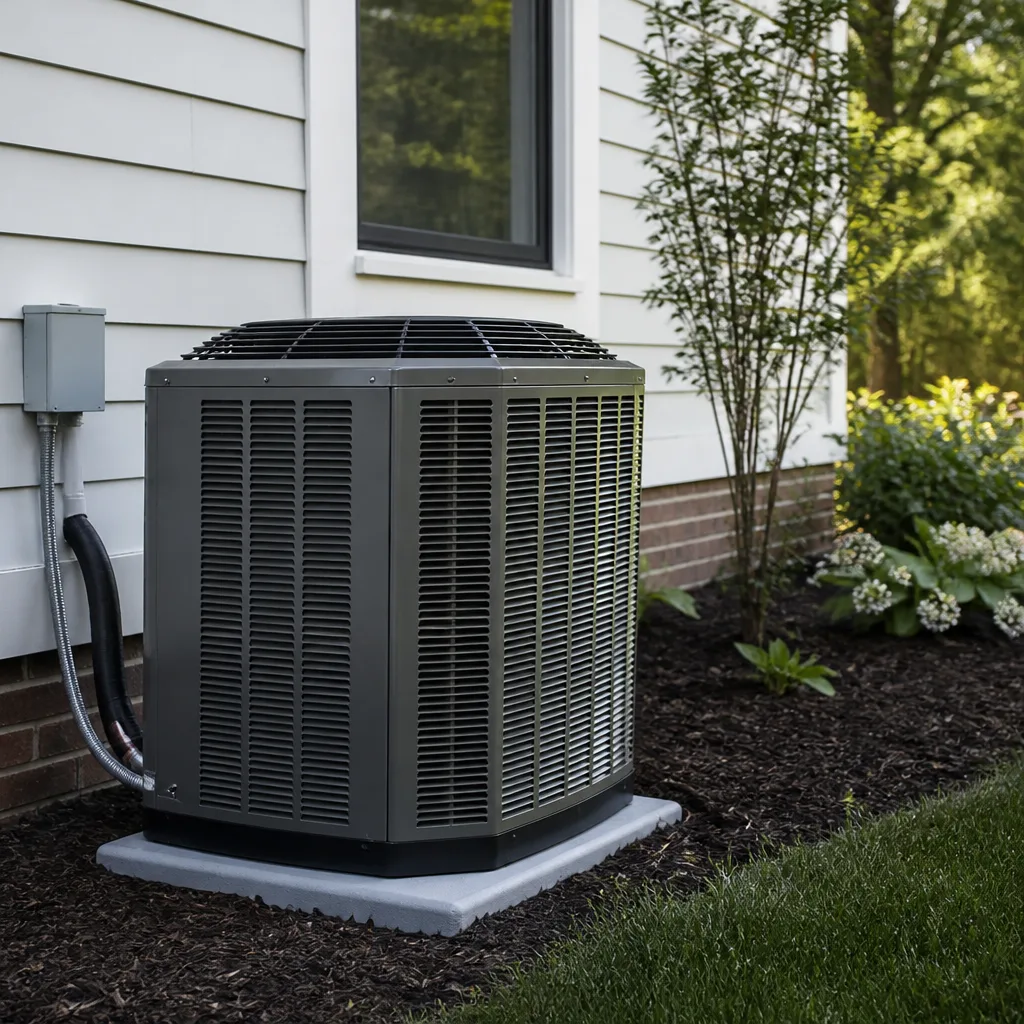 Trane
Trane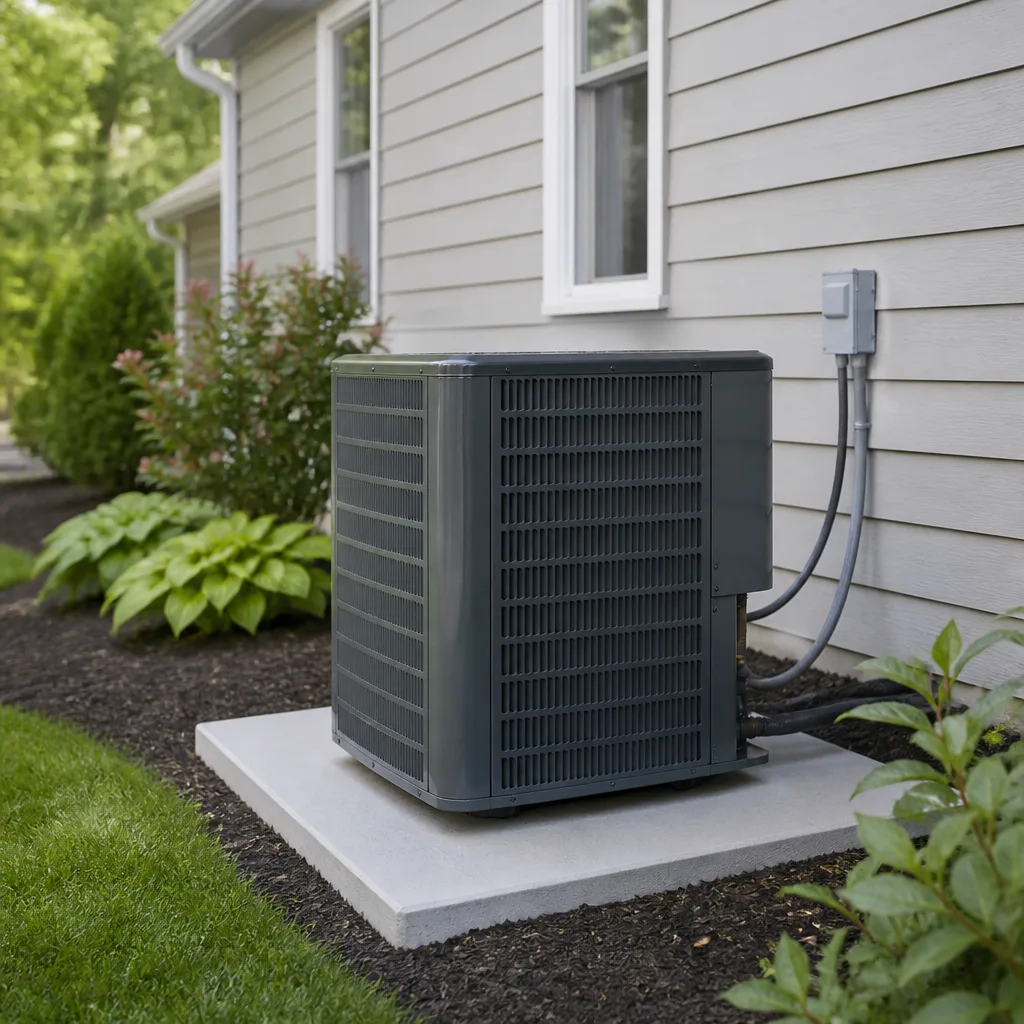 Goodman
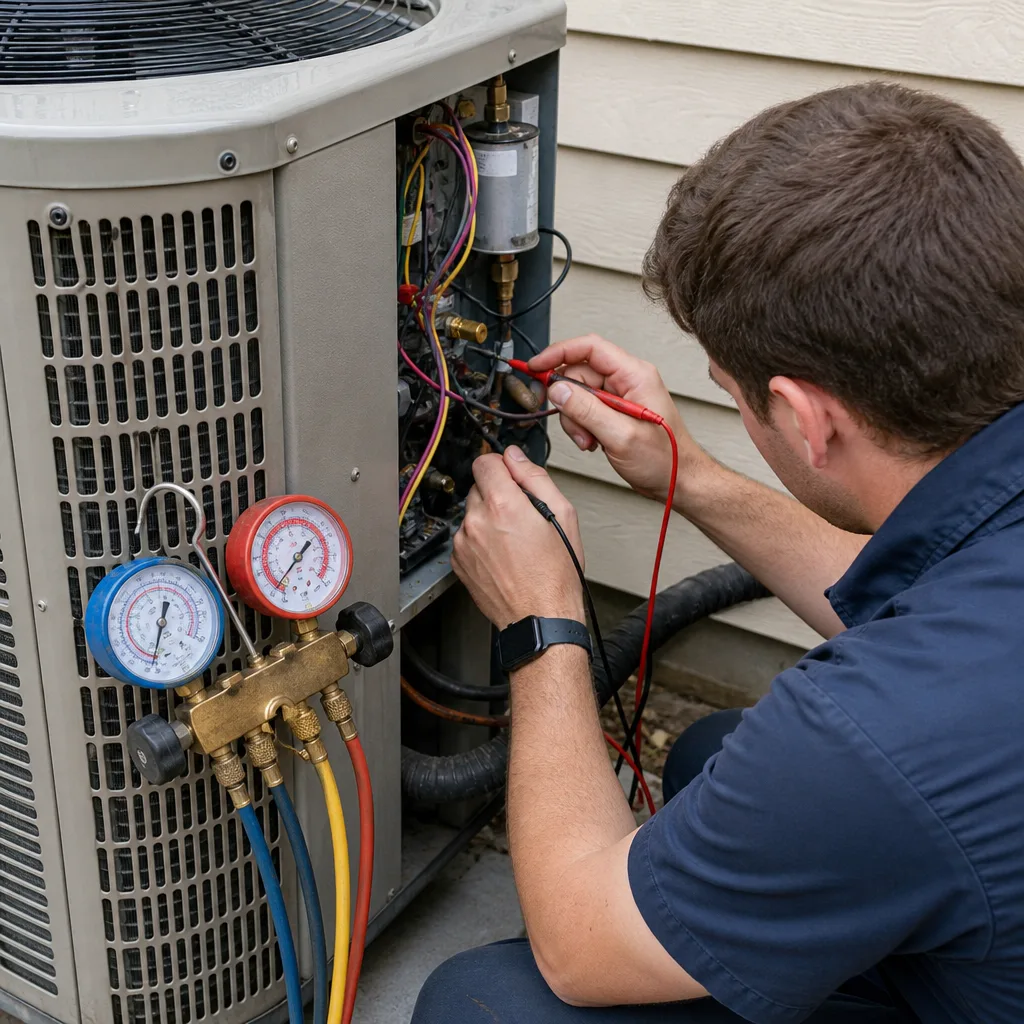
Seasonal tune-up and full diagnostic on your Carrier, Trane, or Goodman system - readings shown to you before any repair is proposed
Diagnosis first, numbers second - you approve the repair price before a single part goes in.
Get your free estimateThe Complete Guide to HVAC in Marietta
Marietta averages 19 days above 90°F every summer, but the number that actually matters for your HVAC system is the dew point, which sits between 68°F and 72°F from June through September. That humidity hangs in the air long after the sun goes down, forcing your AC to keep pulling moisture at 2 a.m. when the outdoor temperature has already dropped to 78°F. Most local AC failures get misdiagnosed as refrigerant leaks when the real problem is a system that was sized for temperature only, never for Marietta’s relentless latent heat load. This guide explains what that means for your equipment, your utility bill, and the decisions you’ll face as a homeowner here, written from the perspective of a company that has worked on Cobb County HVAC systems since 2003.
Quick Answer
HVAC in Marietta means designing, repairing, and maintaining heating and cooling systems for a climate with 100% summer humidity, clay-heavy soil conditions, and winter temperatures that swing from 20°F to 65°F in a single week. Most Marietta homeowners need a 15 to 16.2 SEER2 rated AC paired with a gas furnace rated at 80% to 96% AFUE, sized by a real Manual J load calculation, not a rule-of-thumb square-footage guess. The three things that matter most here are humidity control during shoulder seasons, a level outdoor condenser pad on stable ground, and ducts that are actually sealed, because Marietta’s older ranch homes and newer subdivisions fail in completely different ways.
Styles & brands we work with
Table of Contents
- What Makes Marietta’s Climate Different for HVAC
- Marietta’s Red Clay Soil and Your Condenser Pad
- SEER2 Ratings That Make Sense in Cobb County
- Duct Leakage in Ranch Homes vs. New Subdivisions
- What Threshold Verified Technician Badging Means
- The Marietta Utility Rebate Most Homeowners Miss
- Common Mistakes to Avoid
- When to Call a Professional
- Frequently Asked Questions
What Makes Marietta’s Climate Different for HVAC
Marietta sits in a humid subtropical zone, which sounds mild until you live through a July where the heat index tops 105°F three days in a row. The city sees about 52 inches of rain per year, spread across every month, so the air stays moist even when the temperature is only 75°F. For an air conditioner, that moisture load is the difference between running 14 hours a day in August and running 18 hours a day. It’s also why a properly sized unit often runs almost constantly during peak heat, and that’s not a sign of failure. It’s the system doing its job of removing both heat and water from the air.
Winters here are short but inconsistent. December can bring a 22°F morning followed by a 66°F afternoon, and January often alternates between freezing nights and near-spring days within a single week. That matters because a furnace that runs for 20 minutes on a cold night and then sits idle for three days is more likely to develop ignition problems, cracked heat exchangers, and condensate drain clogs than one that runs at a steady winter pace in, say, Minneapolis. Marietta furnaces fail from cycling, not from constant load.
What this means in practical terms: your AC needs to be sized for humidity removal first, and your furnace needs to be evaluated for intermittent-use wear patterns. We’ve seen countless Marietta systems where the AC cools the air to 72°F but leaves the house at 65% relative humidity, and the homeowner assumes the system works fine. It doesn’t. A system at 72°F and 65% humidity feels like 74°F and grows mold in ducts, on windowsills, and behind wall-mounted televisions.
The fix isn’t always a new unit. In many Marietta homes, slowing the blower fan speed during cooling mode extracts dramatically more moisture without changing the equipment. In others, a whole-home dehumidifier added to the existing system solves the problem at a fraction of replacement cost. These are the conversations worth having before anyone quotes you a new condenser.
Marietta’s Red Clay Soil and Your Condenser Pad
Walk outside right now and look at the concrete pad under your outdoor AC unit. If you see a visible gap between the pad and the unit’s base, if the pad tilts more than about half an inch across its width, or if rain has washed soil away from one corner, you’re looking at one of the most common and least discussed HVAC problems in Marietta.
Marietta’s red clay soil expands when wet and contracts when dry. A single summer of alternating rain storms and drought conditions can move an improperly prepared condenser pad enough to stress the copper refrigerant lines connecting the outdoor unit to your indoor coil. That stress shows up as vibration noise, but it can also cause slow refrigerant leaks that no dye test finds because the leak only opens when the pad shifts during seasonal ground movement.
Here’s what to check on your own unit, standing outside for three minutes:
- Look at the pad from the side. A level run from one end to the other should show no daylight under the unit’s base rail. A quarter-inch gap on one side is a warning sign.
- Check the ground around the pad for erosion channels or depressions where water pools after rain. Standing water means the sub-base under the pad is washing away.
- Gently press down on one corner of the pad with your foot. Movement, even slight rocking, means the pad has lost contact with the sub-base.
- Look at the copper lines where they enter the house. Frayed, kinked, or flattened insulation is evidence the lines have been moving.
In our experience across Marietta neighborhoods, homes on sloped lots (common in East Marietta and along the Kennesaw Mountain foothills) show pad movement at twice the rate of flat-lot homes. Newer subdivisions with compacted fill are not immune, particularly in the first three years after construction when the fill soil is still settling.
If you see movement, don’t ignore it. A leveling correction costs far less than a refrigerant leak repair on a system that’s lost its charge and run hot for a month. The pad needs to be reset on a properly compacted base, the unit re-leveled, and the refrigerant lines checked for stress. This is work for a trained tech, not a weekend project, because moving a charged condenser the wrong way can crack a brazed joint.
SEER2 Ratings That Make Sense in Cobb County
Manufacturers advertise SEER2 ratings up to 24 or higher, and those numbers look impressive on a spec sheet. But the financial math in Marietta doesn’t reward the top of the rating chart because our cooling season, while intense, is shorter than in Florida or Texas. Here’s the plain-language version.
SEER2 is the efficiency rating for air conditioners under the new 2023 testing standards, which more accurately reflect real-world duct conditions. The minimum sold today is 14.3 SEER2 for most systems, 15.2 SEER2 in some equipment classes. A jump from 14.3 to 16.2 SEER2 typically cuts cooling electricity use by about 12%, which on a typical Marietta home running 2,000 cooling hours per year translates to roughly $120 to $180 in annual savings depending on Cobb EMC or Georgia Power rates.
Now the honest math: a 16.2 SEER2 unit usually costs $800 to $1,500 more than the base 14.3 SEER2 equivalent. At $150 per year in savings, that’s a 6 to 10 year payback. If you plan to stay in the home 10 years or more, it’s a reasonable investment. If you might sell in 4 years, the buyer doesn’t pay more for a 16 SEER2 versus a 14.3 SEER2, and you won’t recover the difference.
The sweet spot for most Marietta homes we serve is 15.2 to 16.2 SEER2. Above that, you pay for marginal efficiency gains that our climate can’t fully recoup. Below that, you buy the minimum efficiency and give away savings every summer. This is also where manufacturer rebates and utility incentives overlap, which changes the math in your favor. A Bryant or Carrier unit in the 16 SEER2 range often has better rebate support in Cobb County than a 20 SEER2 flagship that few local distributors stock parts for.
One more factor: humidity removal efficiency. Higher SEER2 units often use variable-speed compressors that run longer at lower output, which removes more moisture than a single-stage unit cycling on and off. For Marietta’s 68°F dew points, a two-stage or variable-speed system at 16 SEER2 often delivers better comfort than a 17 SEER2 single-stage unit at a lower price. That’s a nuance worth asking about when you get quotes.
Duct Leakage in Ranch Homes vs. New Subdivisions
Marietta’s housing stock splits into two broad categories, and each has a completely different duct problem. Understanding which one you have tells you what to look for before you spend money on equipment.
Older ranch-style homes, common in neighborhoods built from the 1960s through the 1980s, typically have sheet metal or flex ducts running through ventilated crawl spaces or attics. After 30 to 50 years of Georgia heat and humidity, the duct sealant has dried out, tape has failed, and connections have separated. In our experience, these homes commonly lose 25% to 35% of conditioned air before it reaches a register. The symptoms: one bedroom always runs 5 degrees warmer, the system runs longer than it should, and the air filter stays dirty because the return is pulling attic air through leaks.
Newer subdivisions, particularly those built since 2010 in west and north Marietta, use more flex duct but often install it with poor workmanship. Constraints at the trunk line, long unsupported runs, and kinks at the register boxes choke airflow to specific rooms. These homes don’t leak as badly, but they suffer from airflow imbalance that no thermostat adjustment can fix.
Here’s the practical difference:
- Older ranch homes: duct sealing is usually the single highest-ROI improvement available, and it often delivers more comfort improvement than a new AC unit. A duct leakage test before any equipment replacement tells you whether you’re about to buy a new system and push the air through the same leaking ducts.
- Newer subdivisions: airflow testing and register-by-register measurement identify the kinked or crushed runs. Sometimes the fix is replacing 30 feet of flex duct, not touching the equipment at all.
If you don’t know which profile your home fits, a technician who has worked in Marietta long enough to recognize the difference by the age of the home and the orientation of the attic is worth more than a generic tune-up. Ask whether the evaluation includes a duct leakage check. If the answer is no, keep looking.
What Threshold Verified Technician Badging Means
Most HVAC companies tell you a technician is coming. Very few tell you who that person is before they knock. That difference matters more in residential neighborhoods than in commercial settings, and here’s why.
In a commercial building, the person meeting the HVAC tech is usually an employee in an office with other people around. In a residential home, the person answering the door is often alone, sometimes with young children, sometimes an older adult who has been told a hundred times not to open the door to strangers. The stakes are different. Residential HVAC means letting someone into your home for hours, often moving between the attic, the garage, and the living spaces. You deserve to know exactly who that person is before you unlock the door.
The Threshold Verified standard operates on a simple principle: every technician is background-checked and identity-verified before they ever step onto a truck, and every customer is told the technician’s name and shown their photo before the visit. When the technician arrives, they carry a photo ID badge and present it at the door. If the person at your door is not the person you were told to expect, the visit is on the company, and the company makes it right.
This isn’t a gimmick. For an older homeowner who lives alone, knowing the name and face of the person arriving is the difference between trusting a knock and dreading it. For a parent home with toddlers during a summer AC failure, it’s one less thing to worry about while dealing with a hot, cranky household. In our experience at Brandt HVAC Co Marietta home, customers mention this more often than price when they explain why they called us back.
The Marietta Utility Rebate Most Homeowners Miss
If you replace your AC or furnace in Cobb County, you’re probably eligible for a rebate, and the odds are good you won’t know it unless someone tells you. This is the one most Marietta homeowners leave on the table: the Georgia Power home energy improvement rebate for ECM motors in new furnaces, not just high-SEER air conditioners.
Most homeowners intuitively understand a high-efficiency AC rebate. They know to ask about SEER2 ratings and federal tax credits under the Inflation Reduction Act. But the furnace side gets ignored. A furnace with a high-efficiency ECM blower motor, the fan that pushes air through your ducts, uses dramatically less electricity than the old PSC motors in 15-year-old equipment. Georgia Power pays a meaningful rebate for this upgrade, and in a home where the furnace usually needs replacing anyway, the motor choice is free money.
Here’s a partial list of available incentives in Marietta as of early 2026:
- Federal tax credit (25C): up to $600 for qualifying high-efficiency AC units, up to $600 for qualifying furnaces, and up to $2,000 for qualifying heat pumps, subject to annual limits.
- Georgia Power rebate: varies by equipment type and efficiency tier, but ECM furnace-motor rebates and high-SEER central AC rebates are both common.
- Cobb EMC rebate: available for members within its service territory, which covers parts of Marietta. Efficiency tiers change annually.
- Manufacturer rebates: brands including Carrier, Bryant, Daikin, and American Standard run seasonal promotions that stack with utility rebates.
The catch: most of these require specific equipment combinations, documentation, and sometimes a licensed contractor’s certification. The rebate application itself isn’t hard, but missing a model number or installing equipment that falls just below the efficiency threshold voids the claim. When you get a quote, ask the contractor to give you, in writing, the exact rebate amounts you qualify for and the equipment combinations required. If they can’t or won’t, get another quote.
Maintenance That Actually Prevents Failures in Marietta
Every HVAC company sells maintenance plans. The question is what the plan actually does, because in Marietta’s specific climate, some tasks matter far more than others. Here’s what genuinely prevents failures, based on what we see in Cobb County homes.
- Drain line flushing during every maintenance visit. Marietta’s humidity means your AC produces gallons of condensate daily in summer. That water sits in a drain line inside your attic or wall cavity. Algae grows fast here. A clogged drain line is the single most common cause of water damage we see in local homes, and it’s preventable with a 10-minute flush.
- Capacitor testing under load. The capacitor is the small part that gives your compressor and fan motor the jolt they need to start. They fail more often in the Southeast than in drier climates because heat and humidity degrade the internal dielectric faster. A meter test takes minutes and predicts failures before they strand you at 2 p.m. on a 95°F August day.
- Condensate trap inspection. The trap under your indoor coil catches debris that lands in the drain pan. Marietta attics get hot, and that heat bakes whatever’s in the trap into a crusty blockage. If your trap is full of sludge, you’re one rust flake away from an overflow.
- Heat exchanger visual inspection. Marietta gas furnaces cycle intermittently through our mild winters, and that cycling creates more thermal stress than continuous operation. A cracked heat exchanger is a carbon monoxide risk. Annual visual checks are not optional, they are the safety minimum.
- Blower wheel cleaning. In homes with pets and in neighborhoods near Kennesaw Mountain’s tree cover, blower wheels accumulate a film that reduces airflow by 20% or more. That’s lost capacity you’re paying for either way.
What a maintenance visit should not be is a sales call. At AC Maintenance in Marietta, we give you a written report of what was found, what was cleaned, and what’s likely to fail next, and the technicians are not paid on what they sell. If your maintenance provider spends more time quoting replacements than documenting the current system, that’s a signal to change providers.
Repair or Replace: How to Decide in Marietta
Every homeowner eventually faces this decision: put another few hundred dollars into the old system or spend thousands on a new one. The answer isn’t a formula, but it should follow a logic. Here’s the framework we use with our Marietta customers, drawn from our DIY vs Professional HVAC: The Marietta Homeowner’s Decision Guide.
First, identify the failed part and its age. A capacitor, contactor, igniter, flame sensor, or drain pan costs $150 to $450 to replace, and fixing it on a 9-year-old system usually makes sense. These are wear parts designed to fail and designed to be replaced. If that’s your situation, repair is the right call, and AC Repair in Marietta should give you a written price before any work starts, with a written guarantee on the repair itself.
Second, identify the compressor’s age and condition. The compressor is the heart of the AC, and replacing one costs $1,800 to $3,500 depending on the system. On a system under 8 years old, a compressor replacement under warranty makes sense. On a system over 12 years old, replacing the compressor means investing in a unit with a limited remaining lifespan, and the money is usually better spent on a complete system replacement.
Third, check whether the system uses R-22 refrigerant. If your unit was installed before 2010, it likely uses R-22, which is no longer manufactured in the United States and now costs $150 to $300 per pound on the rare occasions it’s available. A leak repair plus R-22 refill on an old system can approach half the cost of replacement, and you still have an old system when it’s done.
Fourth, think about your timeline in the home. Replacing a system in Marietta costs $7,000 to $12,000 for a mid-range gas furnace and AC combination, depending on equipment tier and duct modifications-details we break down in our HVAC Cost Breakdown: The Marietta Homeowner’s Reference for 2026. If you’re staying 5 years or more, a new system pays comfort dividends and avoids repair roulette. If you’re selling next year, a $400 repair that gets you through closing is usually the better financial move.
And here’s the Marietta-specific angle: if your system is functional but struggling with humidity, replacement may be the only real fix. Some older systems simply cannot be tuned to remove enough moisture. At Furnace Repair in Marietta, we’ll tell you if that’s the case rather than selling you a part that won’t solve the problem.
Common Mistakes to Avoid
- Buying equipment sized by square footage alone. A 3-ton unit doesn’t fit every 2,000-square-foot house. Marietta homes vary in window area, orientation, insulation, and duct condition. A Manual J load calculation is the only honest basis for sizing.
- Ignoring the drain line until water stains appear on the ceiling. By the time you see a stain, the water has already been pooling in the drain pan. In Marietta’s humidity, drain-line maintenance is a preventive necessity, not an optional visit item.
- Choosing the highest SEER2 rating because “bigger number means better.” Above 17 SEER2, the payback math in Cobb County rarely justifies the price premium. Spend on two-stage comfort and a properly sealed duct system instead.
- Never checking the condenser pad after a wet spring. Marietta’s clay soil moves. A shifted pad leads to refrigerant-line stress and slow leaks. This is a free check you can do in three minutes, and it’s one of the most overlooked causes of local failures.
- Accepting a quote without a written scope of work. A verbal price is not a price. In Georgia, a written estimate protects you, and any reputable Marietta HVAC company will provide one before any work starts.
- Replacing equipment before sealing ducts. If you lose 30% of your air through 40-year-old ductwork, a new 16 SEER2 unit still loses 30% of its air. Seal the ducts first, then evaluate the equipment.
- Waiting until a 100°F week to address a system that “struggled last summer.” Every Marietta HVAC company gets slammed during the first heat wave. You’ll wait longer and pay emergency rates. Address issues in spring or fall when the load is lighter.
When to Call a Professional
Call when you see water pooling around the indoor unit or staining on the ceiling below the attic, when the AC runs but the house won’t cool below 80°F, when the furnace ignites and shuts off repeatedly, when you smell burning or gas odors near the furnace, or when you hear a grinding noise from the outdoor unit. These conditions will not fix themselves, and several of them are safety issues. Brandt HVAC Co Marietta offers free estimates in Marietta, and every job starts with a written price before any work begins. Call (478) 662-5175 and a live person will answer, day or night. For help vetting your options beforehand, see How to Hire a HVAC Contractor in Marietta: A Step-by-Step Guide.
Frequently Asked Questions
A complete gas furnace and AC replacement in Marietta typically runs between $7,000 and $12,000 for a mid-range system, depending on home size, equipment tier, and duct condition. A 16 SEER2 AC paired with an 80% AFUE furnace in a 2,000-square-foot ranch typically lands between $8,000 and $10,500, while variable-speed or high-efficiency combinations push toward the top of that range. Call (478) 662-5175 for an exact written quote, and ask about current utility rebates and manufacturer incentives that may lower the final cost.
Do I need a whole-home dehumidifier in Marietta?
If your AC struggles to maintain indoor humidity below 60% during mild, rainy weeks in spring and fall, a whole-home dehumidifier will improve comfort more than a bigger AC unit will. Marietta’s shoulder seasons combine moderate temperatures with high outdoor dew points, which means your AC doesn’t run long enough to remove moisture even though the house feels sticky. A dehumidifier solves that without overcooling the home.
During Marietta’s June through September cooling season, a standard 1-inch filter should be checked monthly and changed every 30 to 60 days depending on pets, pollen, and system runtime. Cobb County’s oak and pine pollen seasons extend the filter’s workload well past the national average, and a clogged filter is the most common cause of avoidable compressor strain we see locally.
Constant operation with high indoor humidity usually points to an oversized system that cools the air too quickly to remove moisture, or to airflow settings that push air across the coil too fast for condensate to form. Both are fixable, but the fix requires an airflow measurement and possibly a blower-speed adjustment, not a refrigerant recharge. In our experience, this is the most commonly misdiagnosed call in Marietta, because the symptom looks identical to low refrigerant on a surface-level check.
Threshold Verified means every technician is background-checked and identity-verified before being hired, and every customer receives the technician’s name and photo before the visit. The technician presents a photo ID badge at the door, and if the person at your door doesn’t match the person you were told to expect, the visit is on the company and they make it right. This standard exists because residential HVAC means letting someone into your home, and you should never have to wonder who that person is.
A maintenance plan is worth it if it includes drain-line flushing, capacitor testing, trap inspection, and heat exchanger inspection at every visit, because those four tasks prevent the most common Marietta failures. If the plan is little more than a filter change and a visual once-over, it’s not worth the annual fee regardless of the discount it advertises. Ask for the written maintenance checklist before you sign up.
The Bottom Line
Marietta’s HVAC demands are shaped by three facts that national guides miss: humidity that persists through the night, clay soil that shifts outdoor condenser pads, and a housing stock split between aging ranch homes with leaking ducts and newer subdivisions with airflow problems. Get the humidity and duct story right, and almost any modern system will keep you comfortable. Get them wrong, and no SEER2 rating will save you. Work with a company that tells you who’s coming, gives you a written price before touching a wrench, and stands behind the repair for 365 days. That’s what Brandt HVAC Co Marietta built its name on, and it’s what we’ll keep doing in this market, for every homeowner who calls. For more guides & resources, visit our blog.
Written by Devin Marlowe, Owner at Brandt HVAC Co Marietta, serving Marietta since 2003.
See the difference
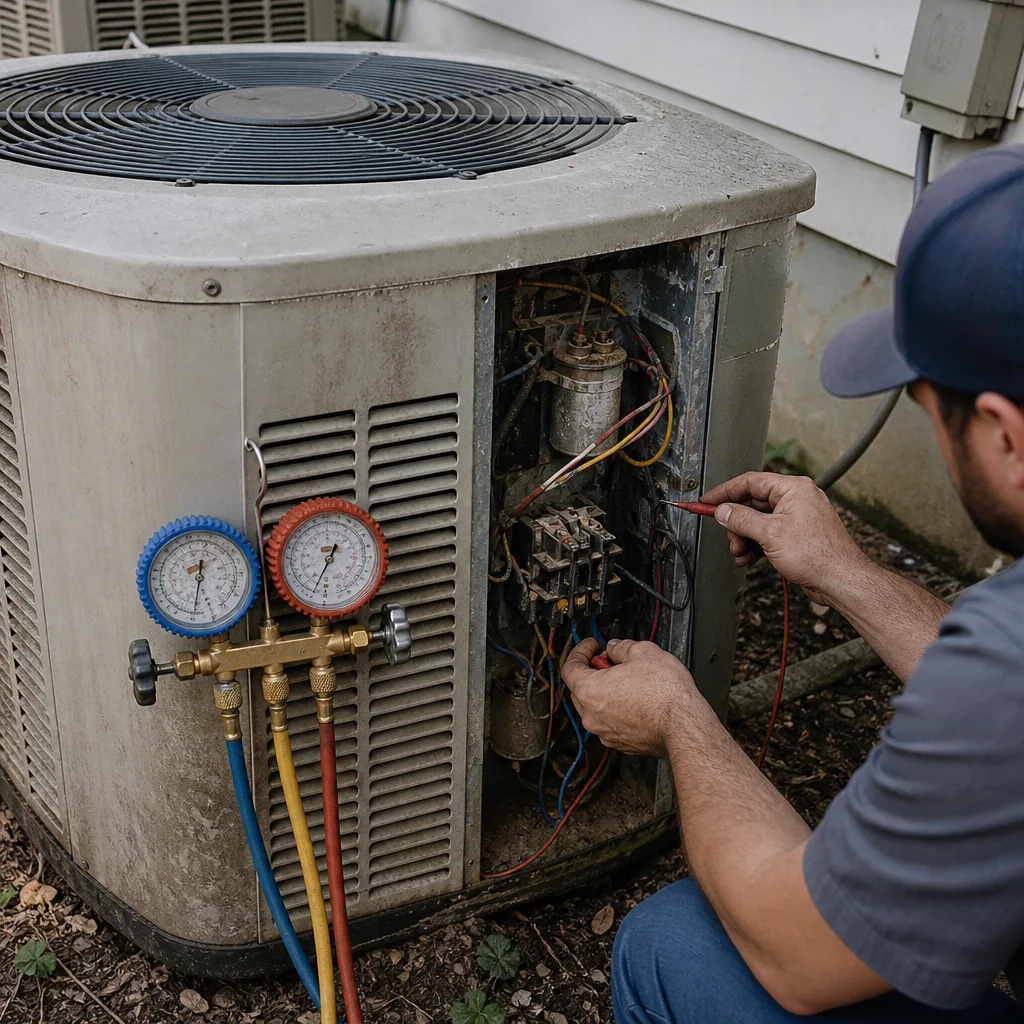 Before
 After
After Before
 After
After