
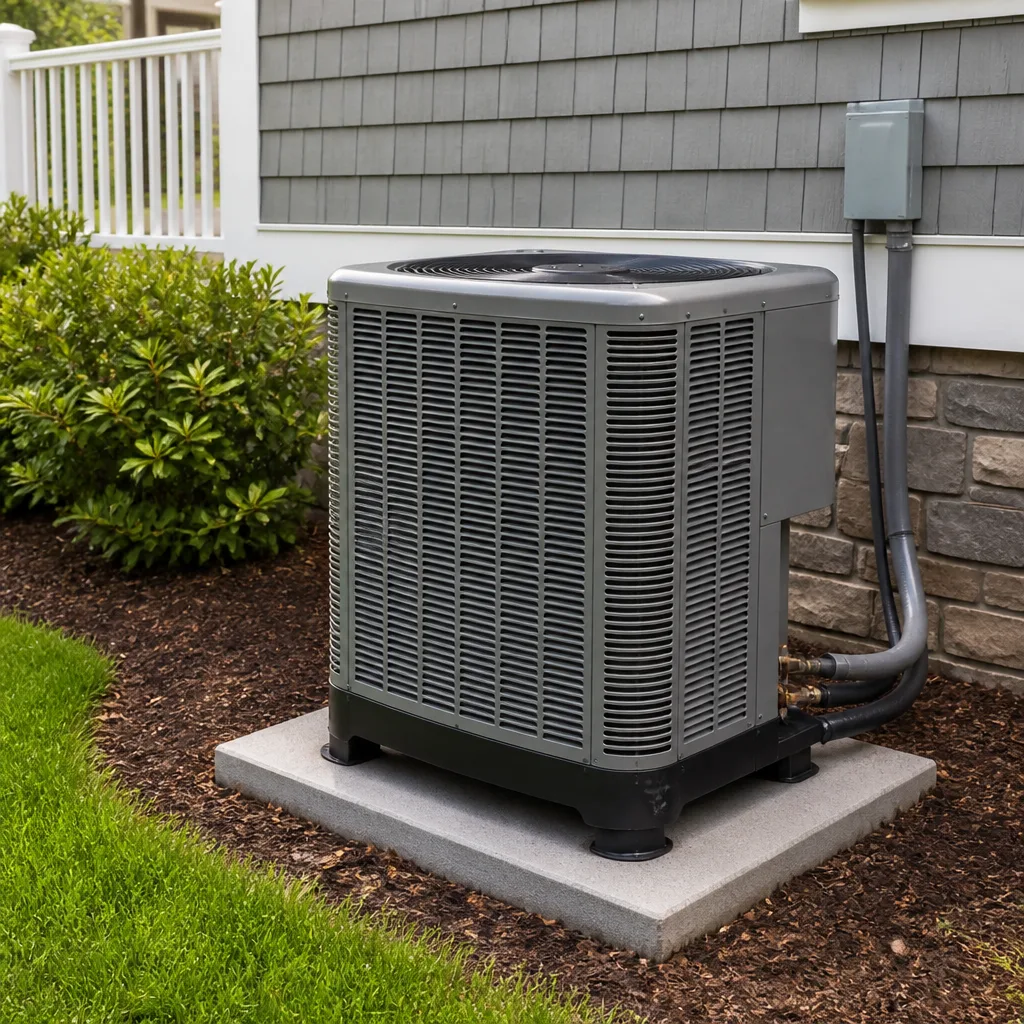
 AC repair
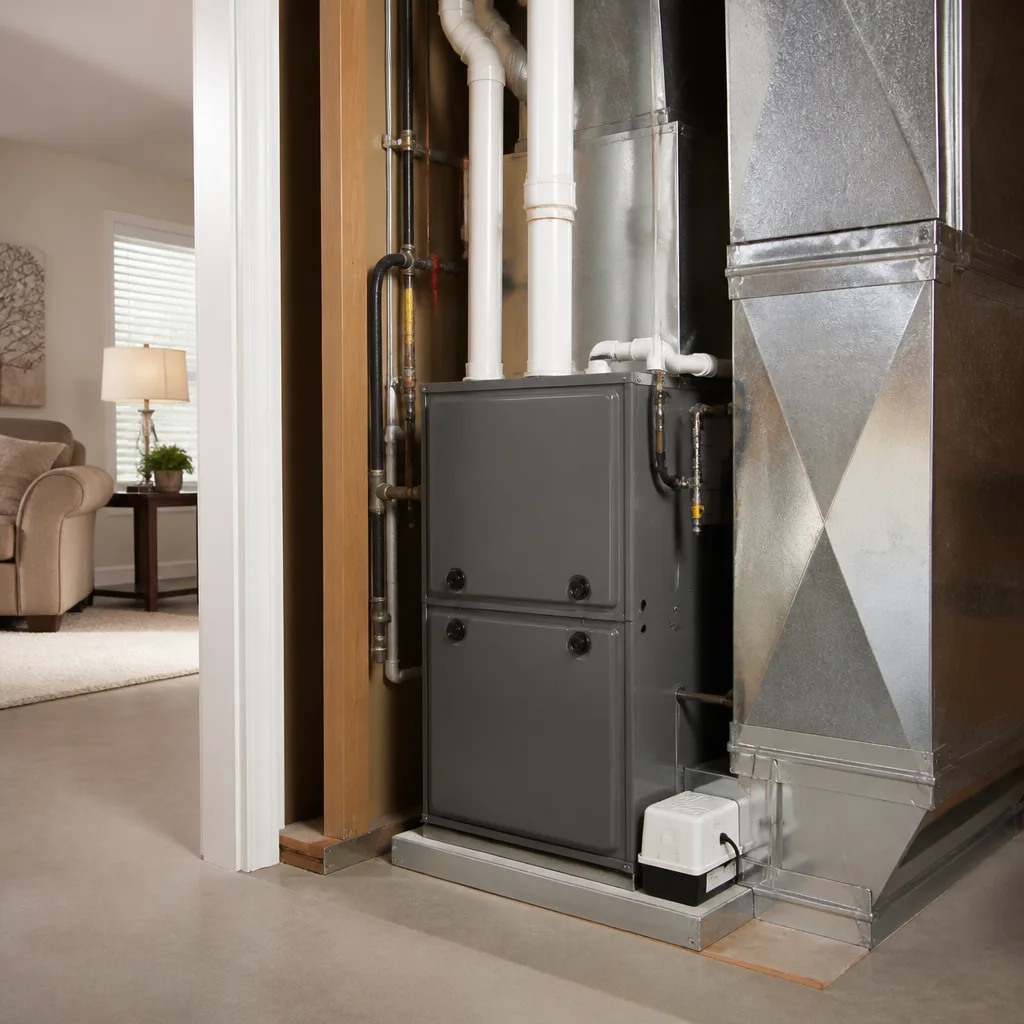 Furnace & heating
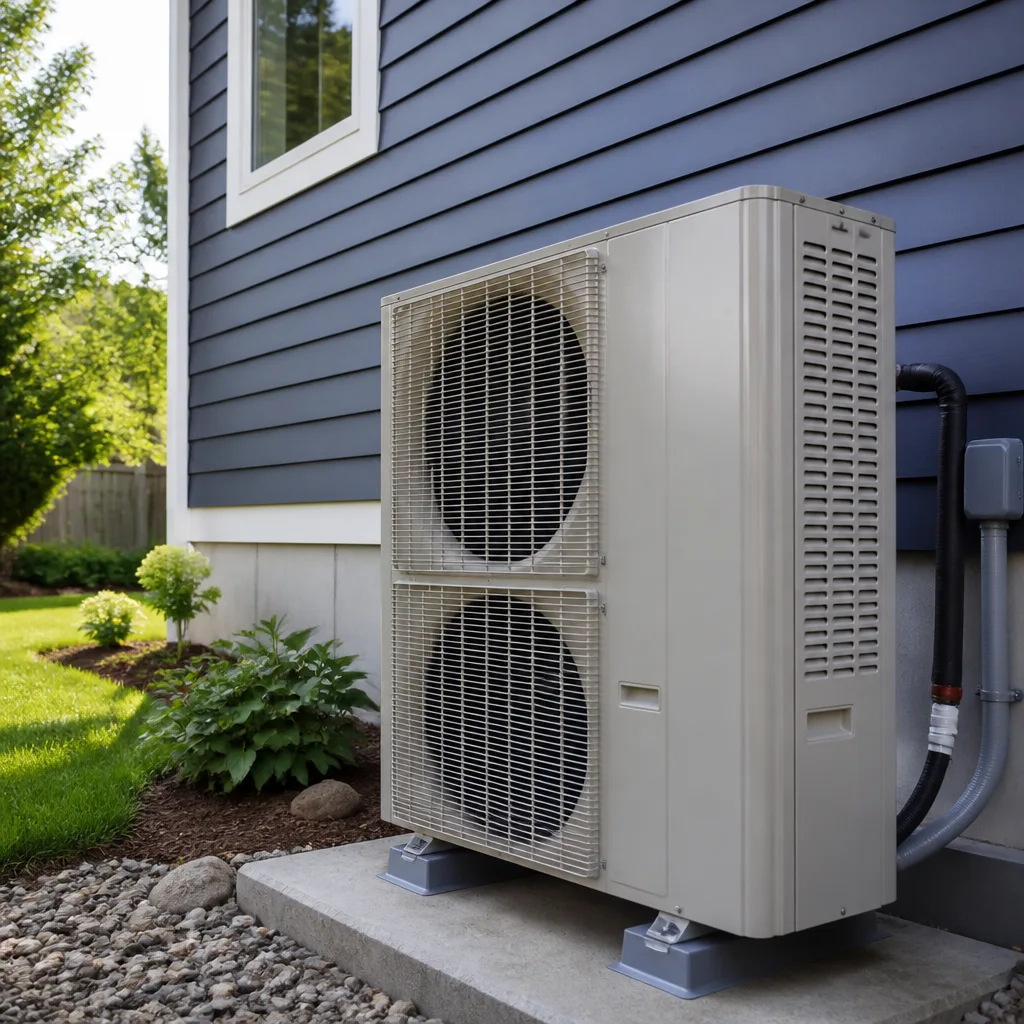 Heat pumps
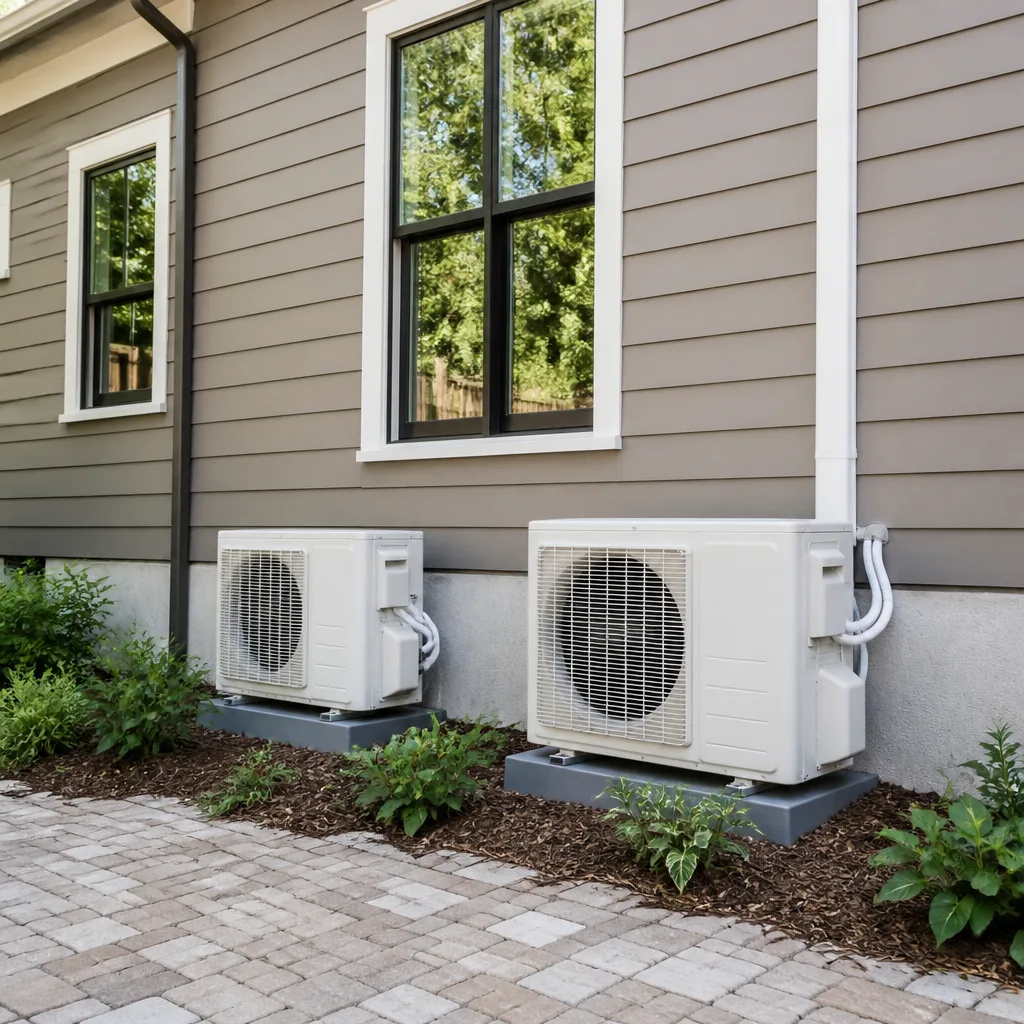 Ductless mini splits
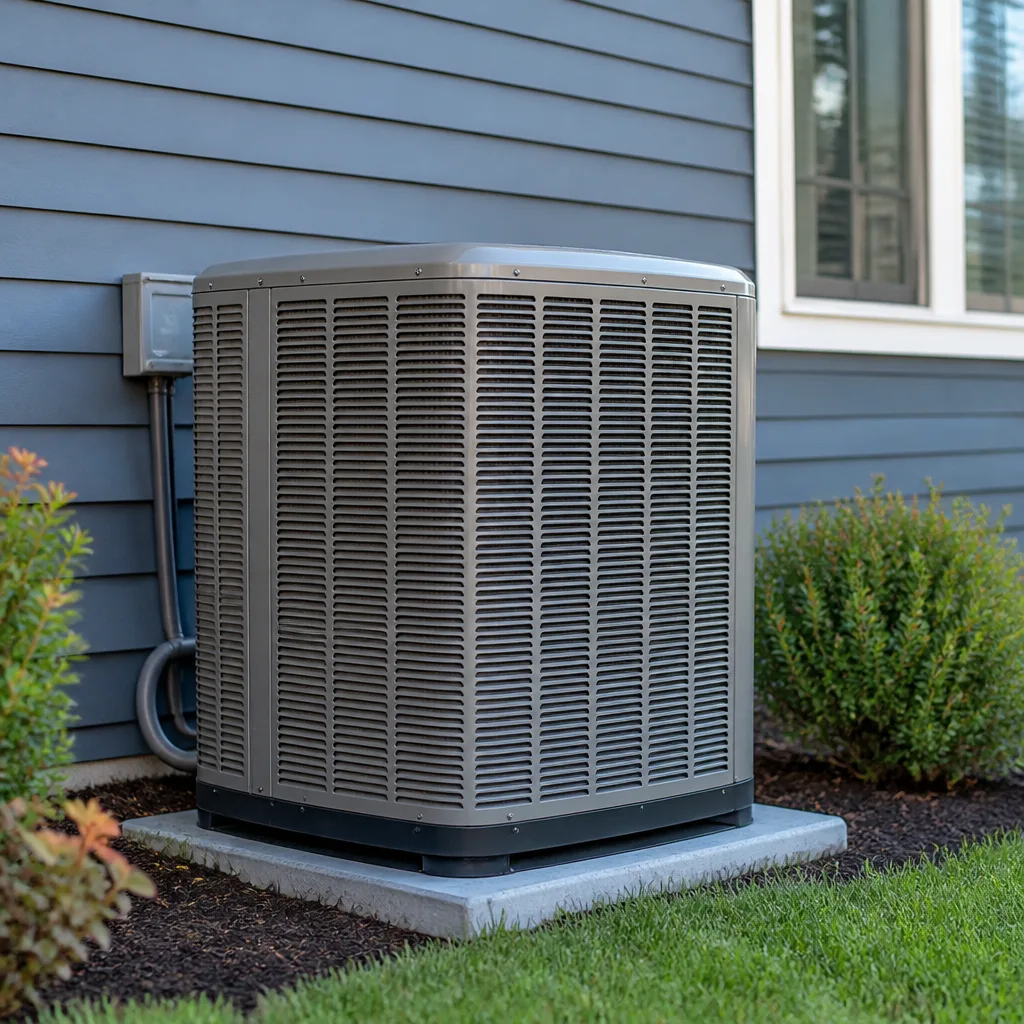 Carrier
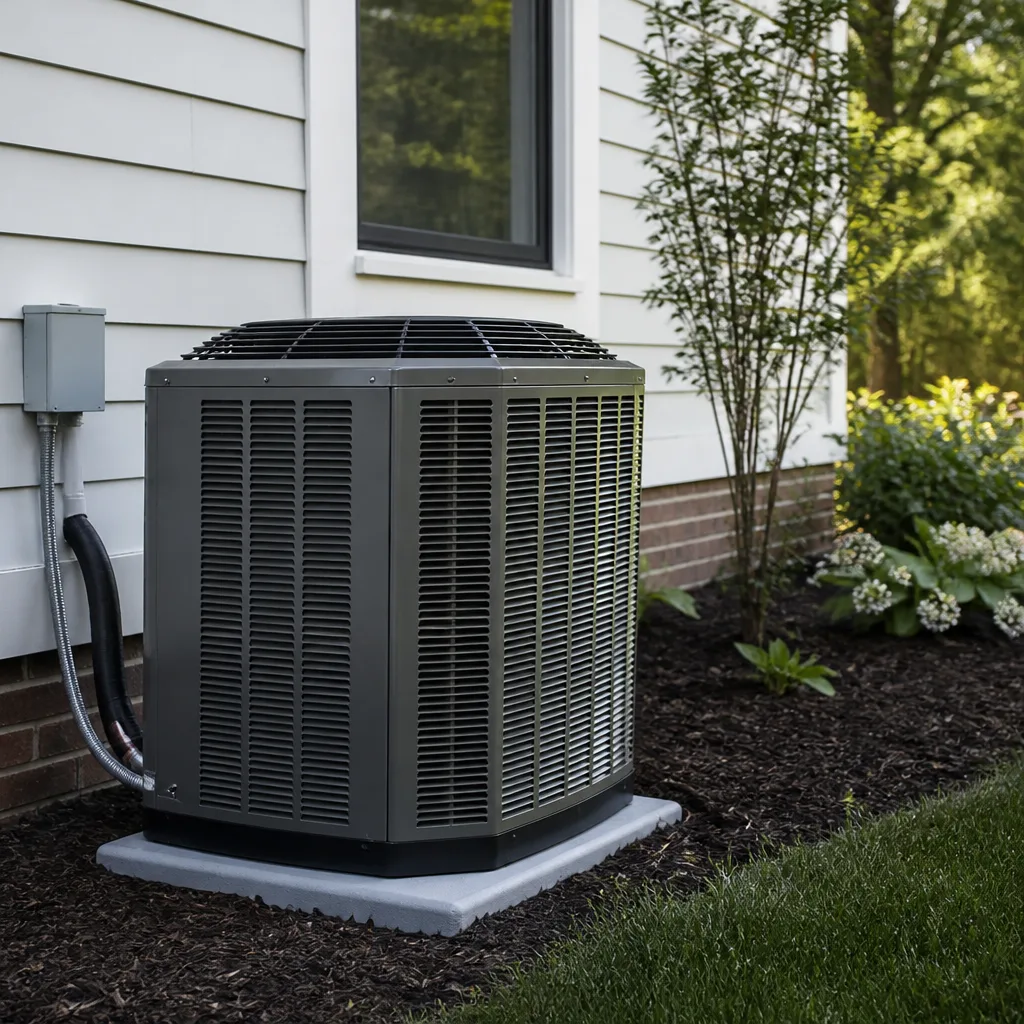 Trane
Trane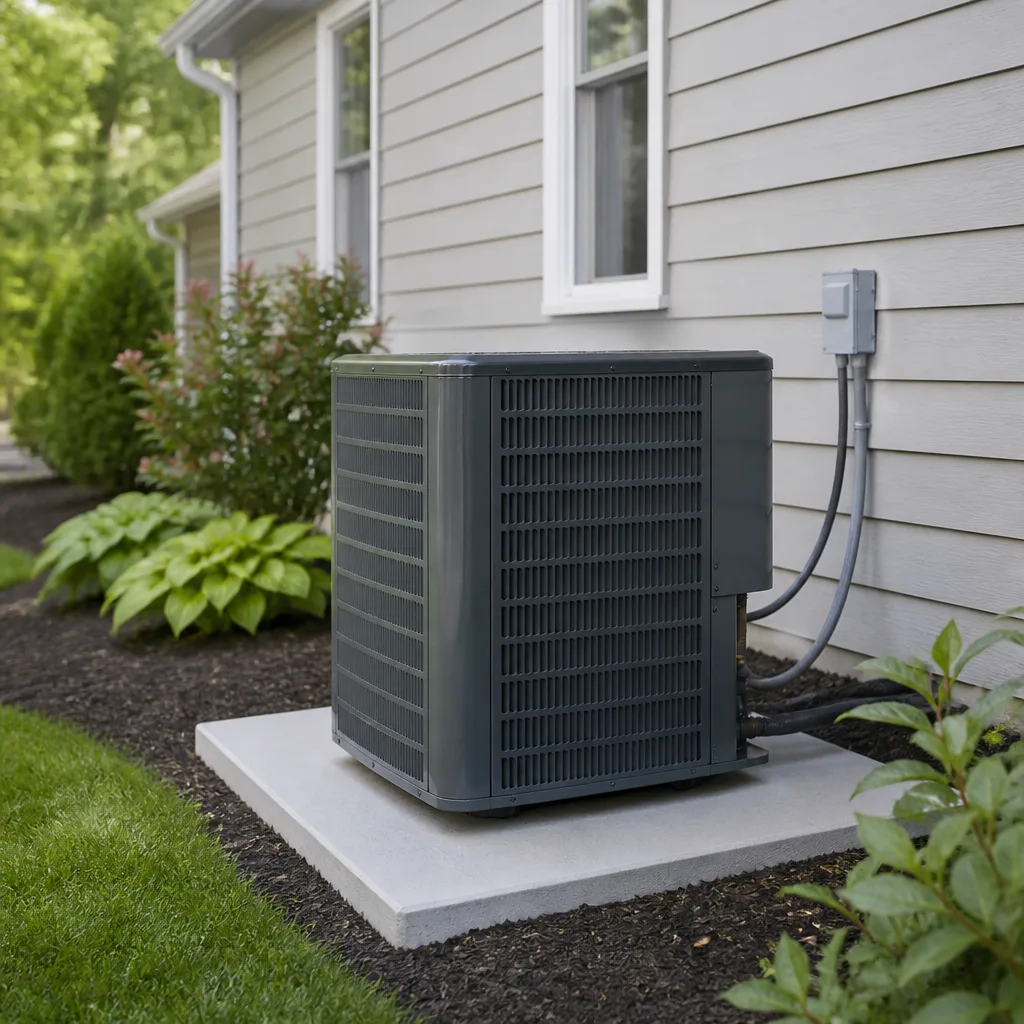 Goodman
Seasonal tune-up and full diagnostic on your Carrier, Trane, or Goodman system - readings shown to you before any repair is proposed
Diagnosis first, numbers second - you approve the repair price before a single part goes in.
Get your free estimateRheem Capacitor Replacement: The Marietta Owner’s Guide
We stock Rheem-compatible capacitors on our trucks and install them same-day across Marietta, typically for $150 – $300 parts and labor included. A capacitor is the small cylinder inside your condenser unit that gives the compressor and fan motor the electrical kick they need to start, and when it fails, the most common first sign is a hum followed by nothing, or an AC that runs the fan but won’t blow cold air. In Marietta’s July heat, that failure usually announces itself on the worst possible afternoon.
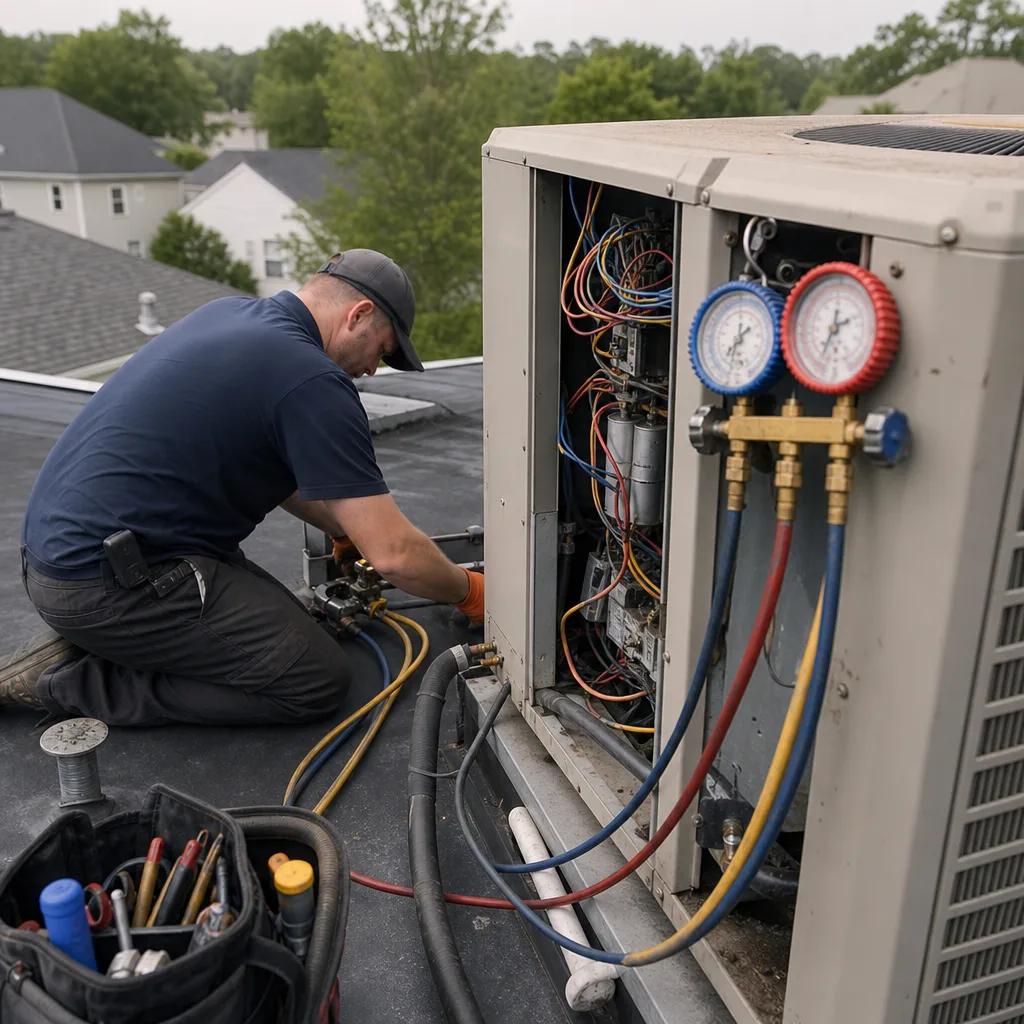
Most Rheem owners discover the capacitor has failed when the outside unit is buzzing but the fan isn’t spinning, or when the system trips a breaker repeatedly on startup. It’s one of the most common AC failures in Cobb County, and it’s also one of the most straightforward fixes, provided the right part goes in and the underlying reason it failed gets checked before you pay.
Key Takeaways:
- Installed Rheem capacitor replacement in Marietta runs $150 – $300 in most cases.
- We stock common Rheem capacitor sizes on the truck, which means same-day repair is realistic for most Marietta homes.
- Capacitors fail more often in Georgia than in cooler climates because sustained heat breaks down the internal dielectric faster.
- The repair is quick, but the part is dangerous to swap if you don’t know how to discharge it safely. More on that below.
Which Rheem Models This Applies To
Rheem has used capacitors across nearly every residential condenser and heat pump line it has produced in the last 25 years, including the Classic, Prestige, and EcoNet series, plus the RA13, RA14, RA16, and RA17 model families common throughout Marietta. If your unit has a single-stage compressor, you’re almost certainly looking at a dual-run capacitor, one cylinder that serves both the compressor and the condenser fan. Two-stage and variable-speed Rheem units can use multiple capacitors or a capacitor paired with a control board, which changes the part number and the price.
The label on the side of the capacitor itself tells you everything you need to match it: microfarad rating, usually noted as MFD or µF, and voltage, typically 370 or 440 VAC. A Rheem unit calling for a 45/5 µF, 440 VAC capacitor cannot safely run on a 40/5 µF part, even though it looks nearly identical and costs about the same. The microfarad rating has to match within tolerance or the compressor works harder, runs hotter, and dies years early. One compatibility gotcha we run into in older Marietta neighborhoods: some Rheem units built before 2005 use oval capacitors instead of round ones, and a round part won’t fit the strap bracket without modifying the mount. We carry both shapes, but it’s worth checking before you order anything online.
On the OEM-versus-aftermarket question: Rheem-branded capacitors are made by the same major electronics suppliers that sell under names like Genteq, Mars, and Titan HD, and a quality aftermarket part with matching specs will usually last as long as the original at a lower price. We install both depending on what’s available and what the homeowner prefers, and we’ll show you the label on the part we’re putting in and explain the spec match before we mount it.
Styles & brands we work with
Signs Your Rheem Capacitor Is Failing
- The outside unit hums, but the fan doesn’t turn. You’re hearing the compressor trying to start without the electrical jolt it needs. This is the classic dead-capacitor sound, and the fix is usually straightforward if you catch it early.
- The fan runs, but the air isn’t cold. The fan side of a dual-run capacitor can remain functional while the compressor side fails, leaving you with air that moves but hasn’t been cooled. Rheem systems are particularly good at masking this one.
- The unit starts sometimes and not others. A capacitor losing its microfarad rating doesn’t always die at once. It fades, like a car battery in cold weather, which means intermittent operation, especially in the evening when voltage demand shifts.
- The breaker for the AC trips on startup. When the capacitor can’t provide enough starting torque, the compressor pulls high current for too long, and the breaker trips as a protective response. If this happens more than once, the capacitor is likely the cause, not the breaker.
- You notice a swollen or leaking capacitor case. A capacitor that’s bulging at the top or showing oil residue at the terminals has vented internally and is already dead or nearly dead. In Georgia heat, this is a predictable failure, not a one-off defect.
See the difference
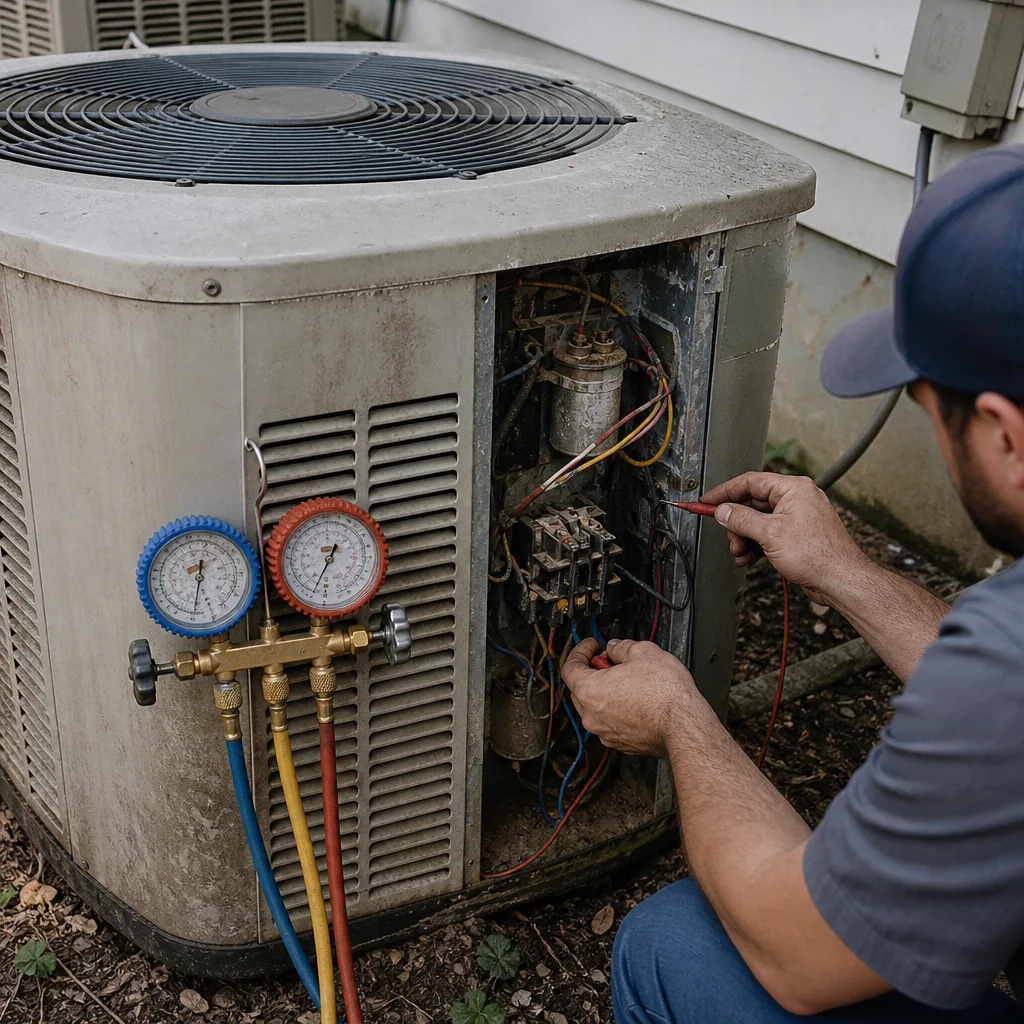 Before
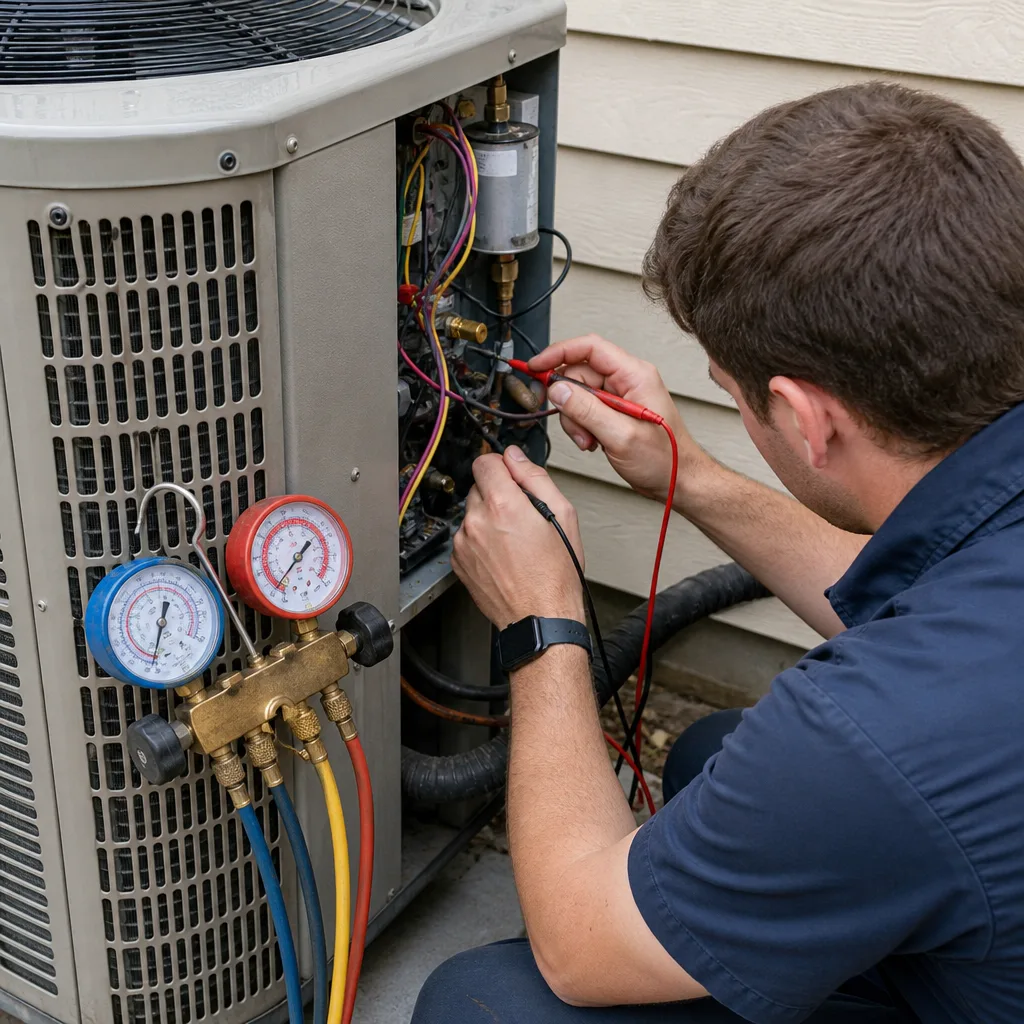 After
After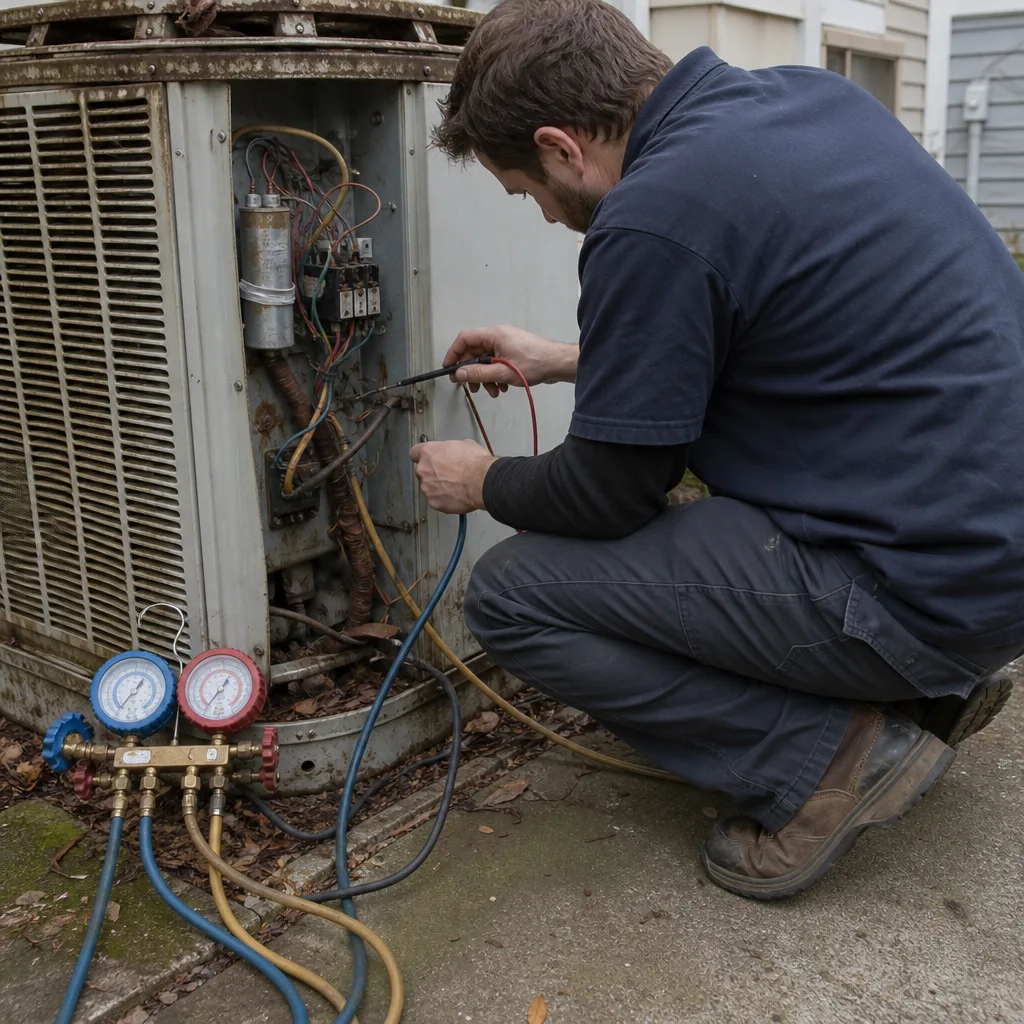 Before
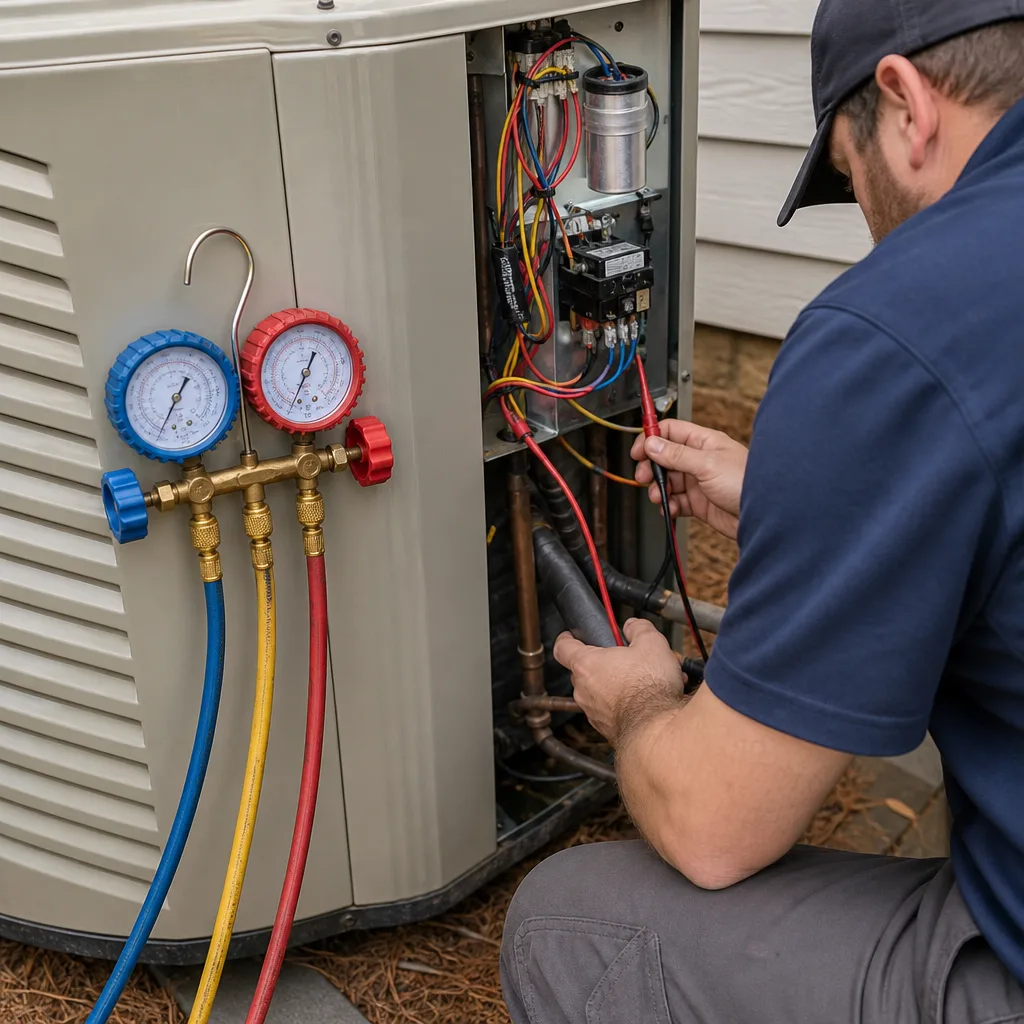 After
AfterReplacement Cost & What’s Included
For a Rheem capacitor replacement in a typical Marietta single-family home, the installed price runs $150 – $300, including the part, labor, and a system startup check. That range lands inside our standard AC repair envelope of $150 – $650, and a capacitor swap sits at the lower end because it’s a high-volume repair we do all summer.
What moves the price inside that range:
- Single vs. dual capacitor: Dual-run capacitors, which serve both the compressor and fan, cost a bit more than single-purpose start capacitors. Most Rheem residential condensers use dual-run.
- Age and access: Some Marietta homes have condensers tucked into tight side yards or behind fences, adding 15 to 30 minutes of labor. The part cost doesn’t change, but the time does.
- Spec requirements: A 440 VAC capacitor costs slightly more than a 370 VAC equivalent, and two-stage Rheem units sometimes require two capacitors rather than one.
Every capacitor replacement we do includes a written price before we start, a written guarantee on the repair for 365 days under our Done Right Promise, and a check of the contactor and wiring while the panel is open. If the capacitor fails again inside that year, the return visit is free, no argument. We also test the old capacitor’s microfarad reading before we condemn it, because a weak capacitor and a failing compressor can sometimes look similar, and you deserve to know which one you’re paying for.
DIY or Call Us?
Here’s the honest split. A capacitor stores enough voltage to deliver a serious or fatal shock even after the power to the unit is off, and the proper way to handle one involves discharging it with a resistor and verifying it’s dead before you touch the terminals. That’s not a scare tactic, it’s a physical reality from the trade, and it’s the reason we tell homeowners plainly: don’t open the service panel and start pulling wires unless you’ve been trained to work on live-capable electrical components.
What you can safely do is confirm the symptom. If the unit hums and the fan won’t spin, you can turn the system off at the thermostat and the breaker, and you can note the model number on the data plate so you have it ready for the call. Beyond that, let someone who handles this repair every week through a Marietta summer take it from there. I’m Devin Marlowe, and the easiest way to keep this simple is to call us at (478) 662-5175 and tell me what it’s doing. I’ll tell you what it needs, no guesswork, no upsell.
FAQs
A Rheem capacitor typically lasts 7 to 12 years in the Marietta heat, and sometimes less on units that cycle constantly through July and August. Sustained high temperatures are the single biggest factor in capacitor aging, which means Georgia units fail sooner than identical units in cooler states. If your Rheem is over 10 years old and has never had a capacitor replaced, you’re on borrowed time.
If your capacitor has failed or your unit is struggling at startup, call (478) 662-5175. We’ll tell you the installed price before any work begins.
No. Capacitors are sealed, non-serviceable components, and there’s no safe or practical way to rebuild one. Once the internal dielectric degrades or the case vents, the part is dead and the only fix is a new capacitor with matching specifications. Anything else is a temporary patch that fails again, usually on the hottest day of the year.
For a straightforward swap with a written guarantee, call (478) 662-5175 and we’ll give you a firm price over the phone.
The swap itself takes 30 to 60 minutes in most cases, including disconnecting power, confirming the old capacitor is discharged, mounting the new part, and verifying the compressor and fan start properly under load. Most Marietta service calls for a capacitor are complete inside an hour and a half from the moment we arrive.
Same-day service is usually available. Call (478) 662-5175 and a live person answers, day or night.
We stock the most common Rheem capacitor ratings and form factors on our trucks, including 35/5, 40/5, 45/5, and 50/5 dual-run capacitors in both 370 and 440 VAC, in round and oval shapes. That covers the large majority of Rheem residential condensers and heat pumps in the Marietta area. For less common specs, we can have the correct part in hand within a day through our local supply network, and we also service and stock parts for Carrier, Trane, and Lennox systems.
If you want to know whether your specific Rheem unit takes a part we keep on the truck, call (478) 662-5175 with the model number from the data plate.
Written by Devin Marlowe, Owner, Brandt HVAC Co Marietta at Brandt HVAC Co Marietta, serving Marietta and nearby areas.