
 AC repair
 Furnace & heating
 Heat pumps
 Ductless mini splits
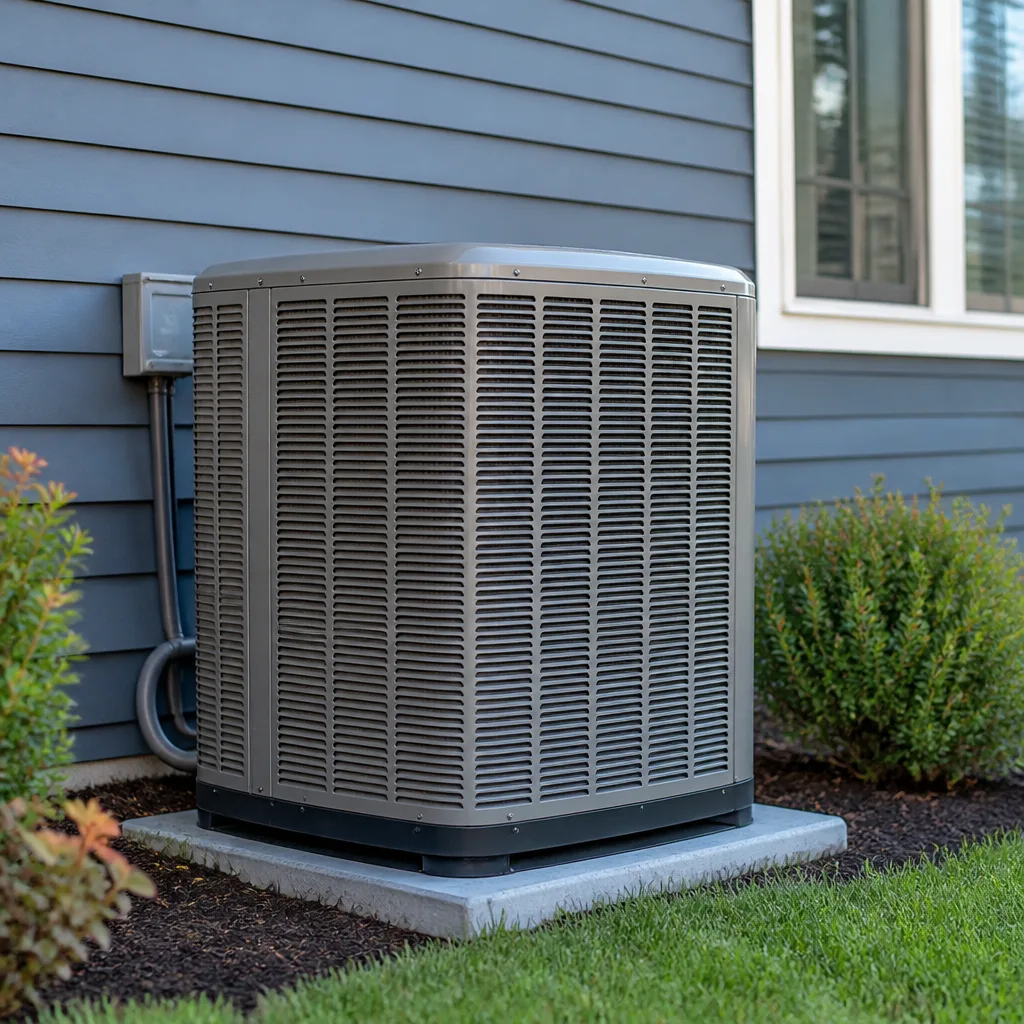 Carrier
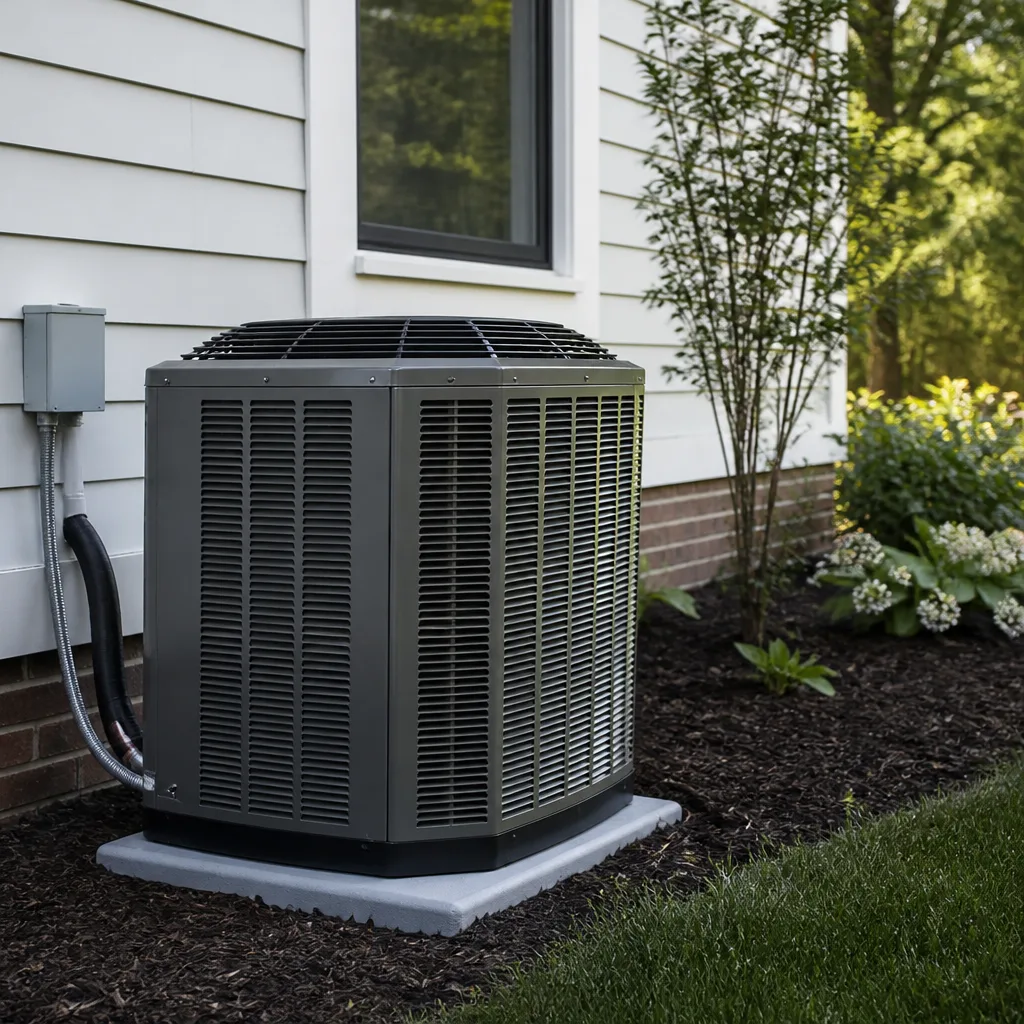 Trane
Trane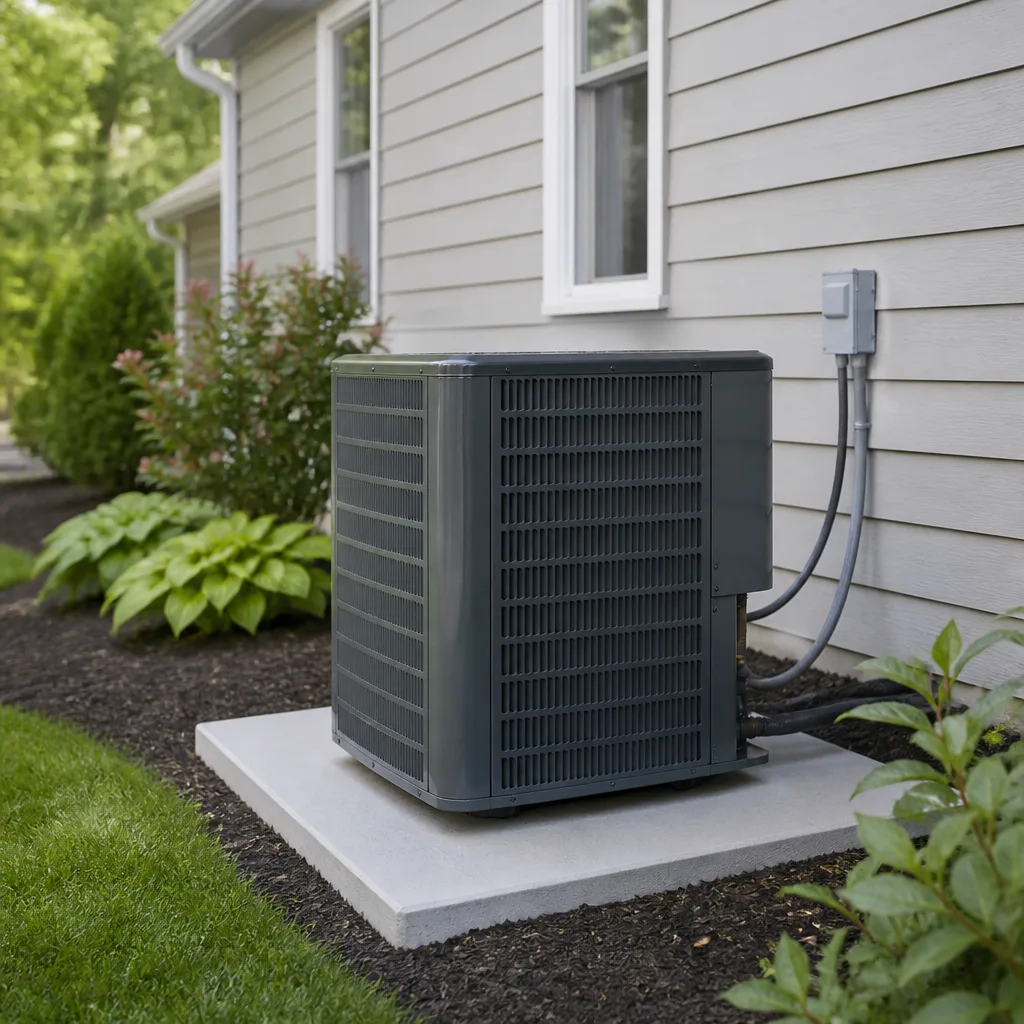 Goodman
Seasonal tune-up and full diagnostic on your Carrier, Trane, or Goodman system - readings shown to you before any repair is proposed
Diagnosis first, numbers second - you approve the repair price before a single part goes in.
Get your free estimateLennox Ductwork Repair: The Marietta Owner’s Guide
Lennox ductwork repair in Marietta typically runs $150 – $650 depending on what failed: a disconnected joint, a crushed return, a leaking plenum, or collapsed flex duct. We stock the common Lennox-compatible fittings, collars, mastic, and flex duct on our trucks, so most ductwork repairs are same-day once we see the system. The usual discovery goes like this: one room in the house stops getting air, the utility bill climbs for no obvious reason, or you notice dust building up faster than it used to around the registers. Sometimes it’s a whining sound when the blower runs. All of those point to the same underlying truth: your Lennox equipment is working, but the duct system is not delivering what it produces.
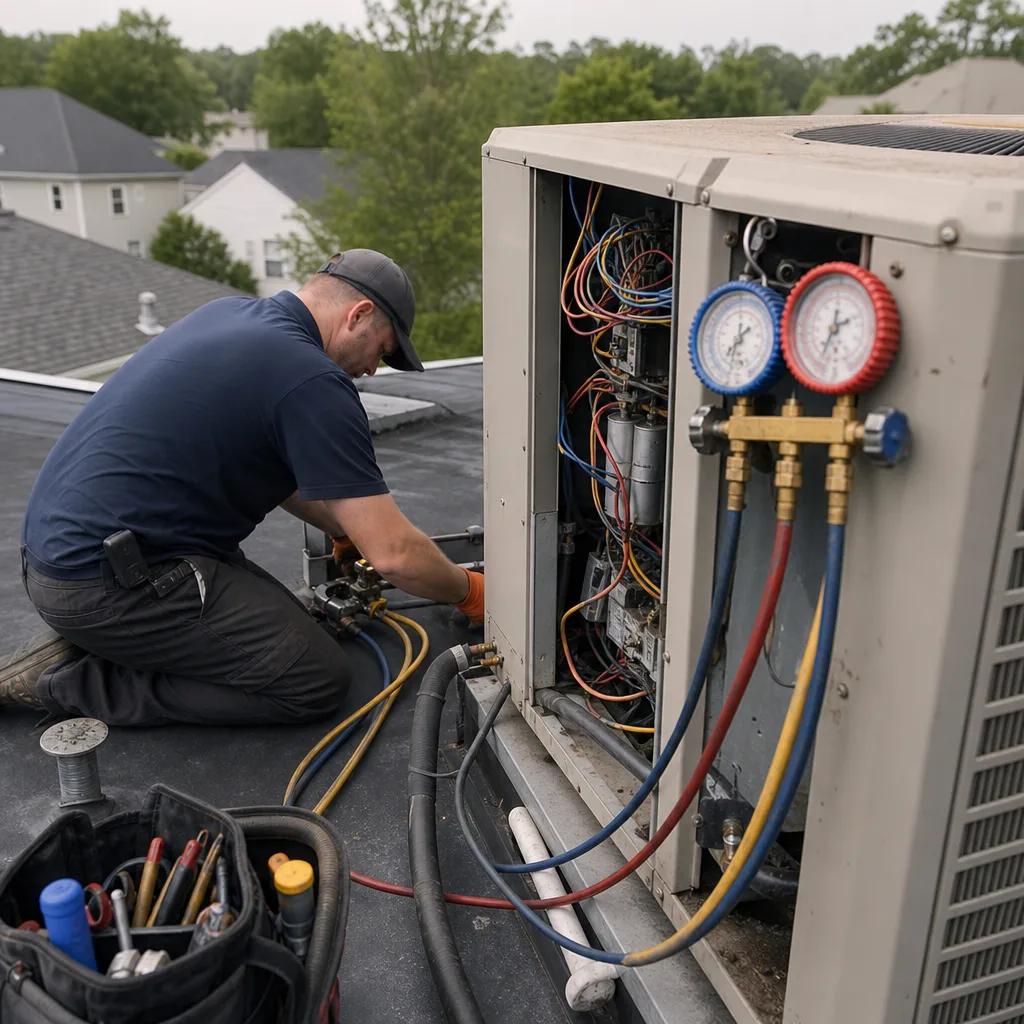
What surprises most Marietta homeowners is that ductwork is usually the weakest link in a Lennox system, not the equipment itself. The furnace or air handler can be in perfect shape while the ducts quietly leak 20 to 30 percent of the air you’re paying to condition. Devin Marlowe and our crew have opened plenty of crawlspaces and attic hatches in this area only to find duct tape peeling off seams, joints that were never sealed properly, or flex duct that got crushed by someone storing boxes on top of it. The good news is that most of this is repairable without replacing the entire duct system, and the repair is far less expensive than homeowners expect once we locate the actual failure point.
Which Lennox Models This Applies To
Lennox ductwork doesn’t carry a model number in the way a furnace or air conditioner does. The ducts that connect to your Lennox equipment are either rigid sheet metal, fiberglass duct board, or flexible insulated duct, and all three are sized to match the airflow your specific Lennox system was designed to move. A Lennox EL296V furnace needs a particular duct configuration, and so does a Merit Series ML14XC1 air conditioner paired with a matching evaporator coil. The compatibility question isn’t about the Lennox brand name stamped on the duct. It’s about matching the duct dimensions, insulation R-value, and air-sealing method to the blower specifications of your particular Lennox model.
What you want to look for when we open the system: the plenum connection at the top of the furnace or air handler, the return drop on the intake side, and any transition pieces where duct sizes change. Lennox equipment has specific cabinet dimensions, and the starting collar or plenum fitting has to match those dimensions exactly. If someone installed a generic fitting with a gap, that gap is leaking conditioned air into your attic or crawlspace right now. You’ll also see markings on flex duct like “R-6” or “R-8” printed on the outer jacket. That’s the insulation value, and Georgia code requires R-8 minimum for ducts in unconditioned attics. We see plenty of Marietta homes with R-4 or R-6 flex duct that technically worked when installed but sweats and loses efficiency in a Georgia summer.
One more compatibility gotcha worth knowing: Lennox systems that use the iComfort communicating thermostat often run variable-speed or multi-stage blowers. Those blowers ramp up and down, and if your ductwork was sized for an older single-stage system, the new Lennox unit may be pushing against restrictions it wasn’t designed for. That’s not a failure of the equipment. It’s a duct sizing and sealing problem that shows up as higher static pressure, noisy registers, and shortened blower motor life. We check static pressure on every ductwork diagnosis, because the numbers tell us more than our eyes can.
When it comes to OEM versus aftermarket for duct materials, here’s the honest breakdown. Ductwork itself is rarely branded Lennox. The sheet metal, flex duct, mastic, and foil tape we use comes from manufacturers who supply the entire HVAC trade. Quality matters far more than the label. We use aluminum foil tape for seams, not cloth duct tape. We seal with water-based mastic, not cheap caulk. And we use R-8 rated flex duct on any replacement run, because it meets or exceeds code and holds up to the heat load in a Marietta attic, which routinely hits 130 degrees in July.
Styles & brands we work with
Signs Your Lennox Ductwork Repair Is Failing
- One or two rooms never reach the thermostat temperature. This is almost always a disconnected or crushed duct run feeding those specific rooms. The conditioned air is dumping into the attic or crawlspace instead of reaching the register. We find this constantly in the older homes near Marietta Square, where decades of repairs, renovations, and attic storage have taken a toll on the duct runs.
- Your energy bill rose without a change in usage. Leaking ductwork means your Lennox system runs longer to hit the same setpoint. In a Georgia summer, a 25 percent duct leak translates directly into real dollars on your Georgia Power bill. Attic temperatures are the multiplier, because that leaked air is going into a 130 degree space.
- Dust appears on surfaces days after you clean. A return-side duct leak pulls unfiltered attic or crawlspace air into your Lennox system, and the blower circulates it through the whole house. This is also a comfort and air quality issue for anyone with allergies in the home.
- You hear whistling, banging, or a rumble when the blower runs. Whistling is air being forced through a gap or an undersized opening. Banging is sheet metal flexing when the blower cycles on and off. A rumble often means the return path is too small, so the blower is struggling to pull enough air. All three are duct issues, not equipment failures, and all three are fixable.
- Rooms over a crawlspace or garage are noticeably colder in winter and hotter in summer. Those runs are usually the longest and the least insulated. If the flex duct jacket is torn or the seams were never sealed, the air loses its conditioning long before it reaches the register. We see this pattern in Marietta homes with additions, where the original duct layout wasn’t extended properly.
See the difference
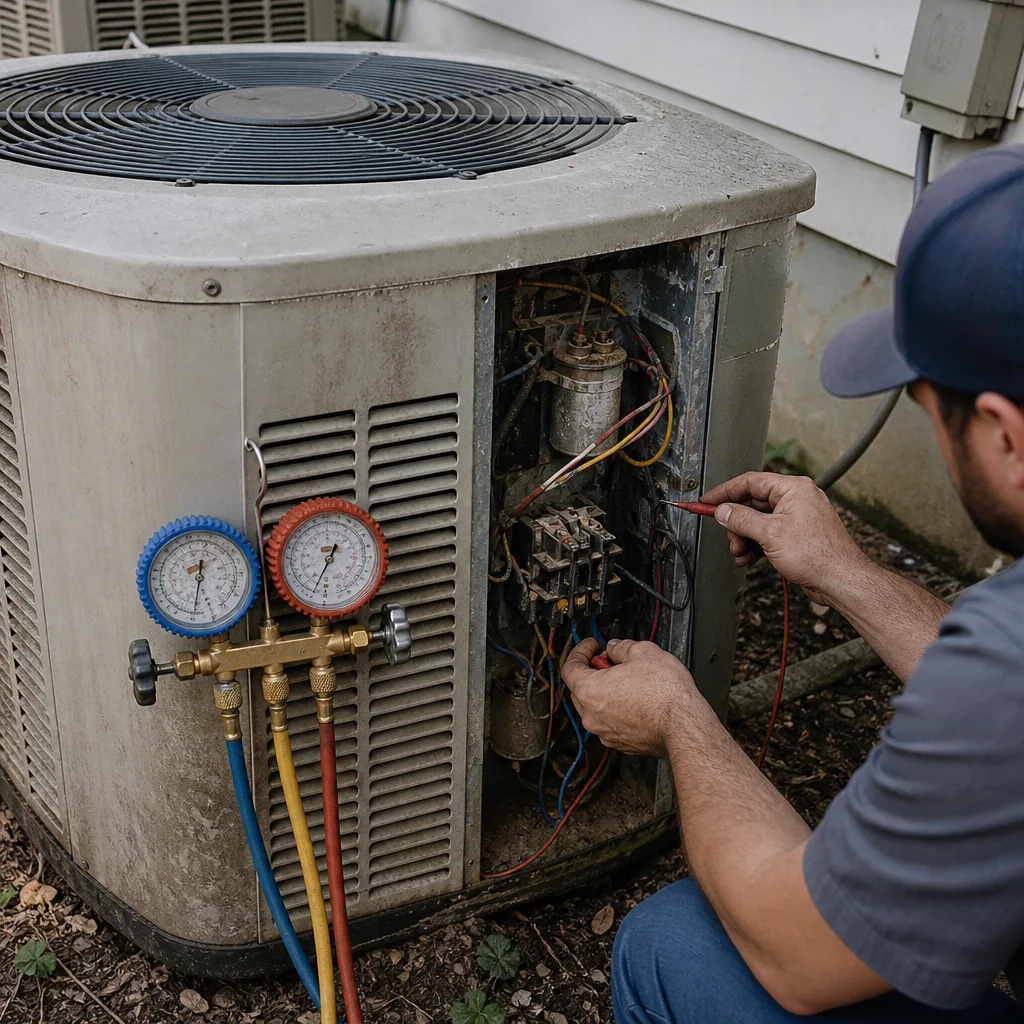 Before
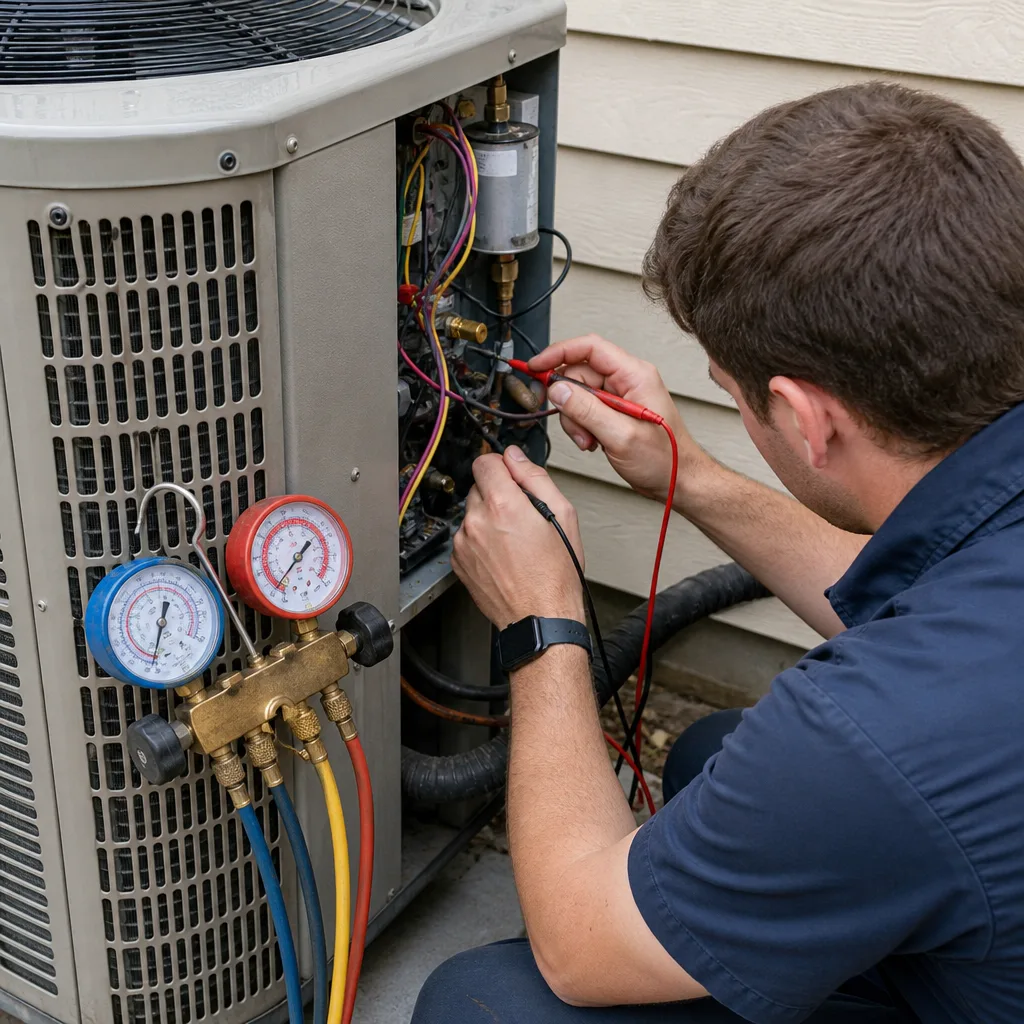 After
After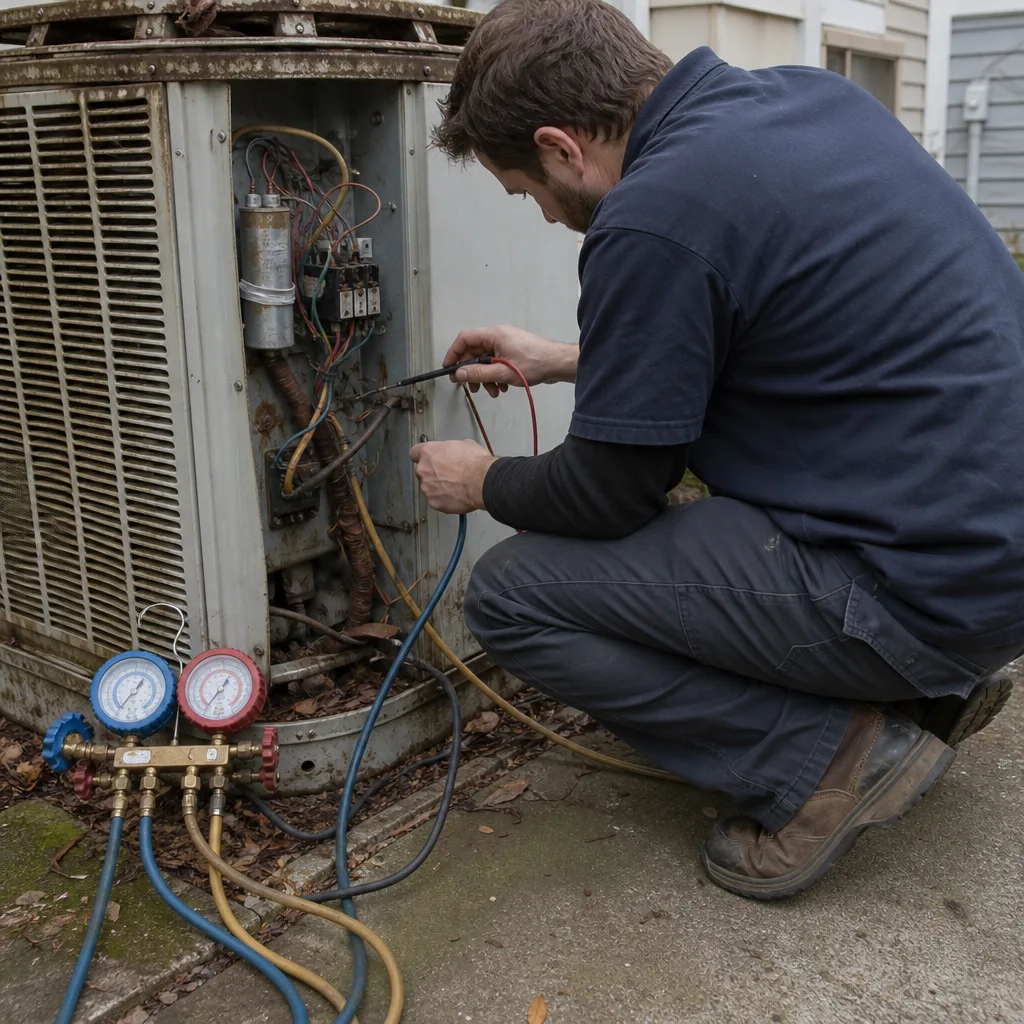 Before
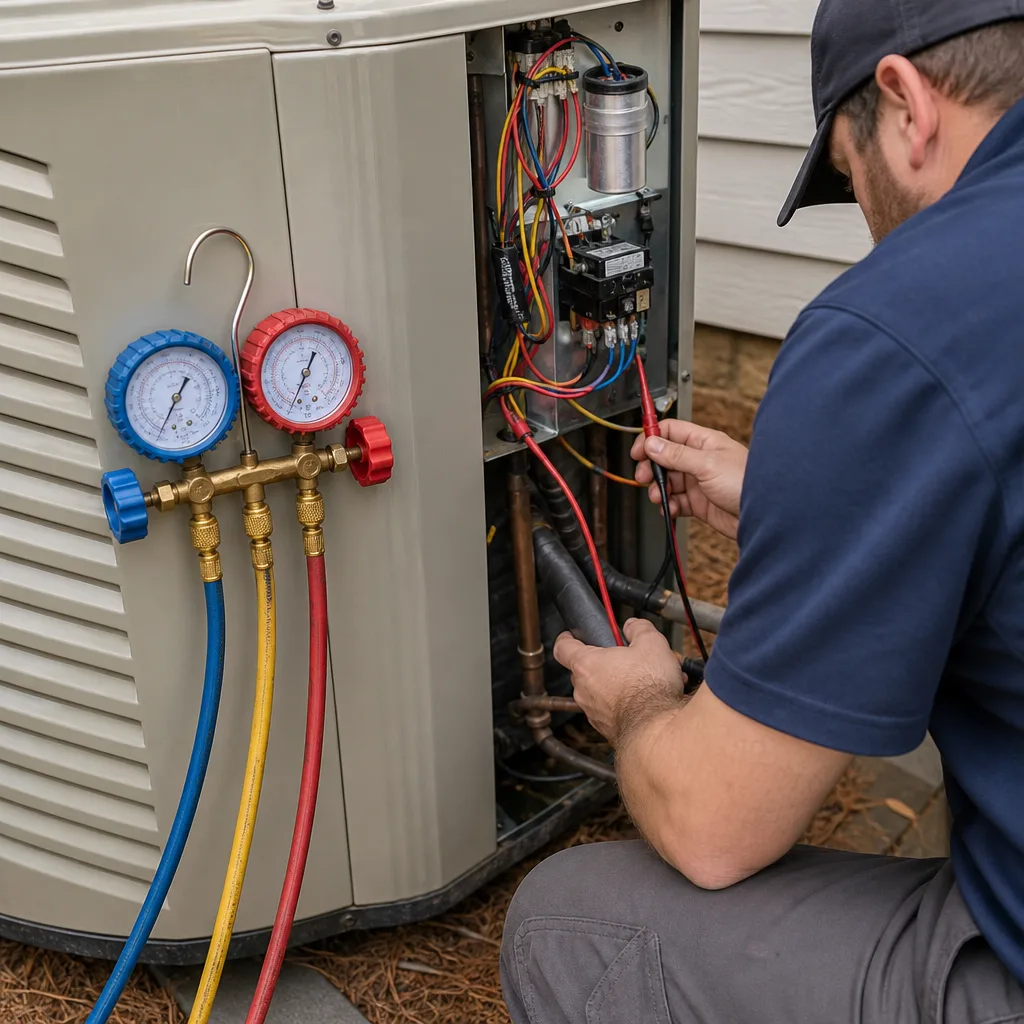 After
AfterReplacement Cost & What’s Included
Ductwork repair pricing in Marietta breaks down by the scope of the failure. A simple disconnected flex duct or a loose joint that needs resealing and re-strapping lands on the lower end, typically $150 – $300. A crushed return duct that requires a new section of flex, a new fitting, and proper support runs $300 – $500. Replacing a leaking plenum or transition piece, or rebuilding a portion of the return path, falls in the $450 – $650 range. When the work requires multiple repairs across the system, we write the whole thing up as one job with one price, so you see the total before any work starts.
Every Brandt HVAC Co Marietta ductwork repair includes the same structure: the parts and materials, the labor for the repair, a static pressure reading before and after where applicable, and a written guarantee on our work. The guarantee covers the repair itself for 365 days under our Done Right Promise. If the joint we sealed comes loose or the flex run we installed fails within that year, we return and fix it at no charge. You get the price in writing before we touch anything. No surprises when the invoice comes. That’s the way Devin has run every job since he started this location, and it’s not changing.
What drives cost upward is access. Attic work in peak summer is hot, slow, and dangerous, and crawlspace work requires proper protective gear and lighting. Older Marietta homes with tight pitch roofs and limited attic access add time. If we’re in a finished basement ceiling with no access panel, that also changes the labor picture. But the material cost on most duct repairs is modest. The labor and the conditions are what you’re paying for.
DIY or Call Us?
There are a few things an owner can safely check before calling us. Look at the visible ductwork in your basement, garage, or attic. Is a flex run sagging or resting on a ceiling joist? Is there a visible gap at a joint where foil tape has peeled away? Can you feel cold air escaping somewhere the ducts connect? Those observations help us diagnose faster when we arrive. Tell me what it’s doing, and I’ll tell you what it needs, no guesswork, no upsell.
What you should not do is climb into a hot attic in July, crawl through a tight crawlspace without proper protection, or start cutting into ductwork to “see what’s going on.” Attics reach temperatures that cause heat exhaustion fast. Crawlspaces in this part of Georgia harbor critters, exposed nails, and sometimes standing water. Sheet metal edges are sharp enough for stitches. If the ductwork runs through any space you can’t comfortably stand in with good lighting, that’s a job for a trained technician with the right gear. We send our people in with gloves, respirators where needed, lights, and a second pair of hands when the job calls for it. Call (478) 662-5175 and we’ll get someone out to look at it properly.
FAQs
Flex duct in a Marietta attic typically lasts 15 to 25 years before the outer jacket degrades or the inner liner starts to tear. Sheet metal ductwork can last the life of the house if it stays dry and sealed. The Georgia factors that shorten duct life are extreme attic heat, humidity in crawlspaces, and rodents. Most failures we see are not age-related, though. They’re installation failures from day one: joints that were never sealed, runs that were never properly supported, or connections that were forced and came apart under pressure. If you’ve had your home 10 years and never had the ducts inspected, you’re due for a look. Call (478) 662-5175 and we’ll schedule it.
Most damaged ductwork in Marietta homes can be repaired. A disconnected or leaking joint gets resealed and mechanically fastened. A crushed section of flex duct gets cut out and replaced with a proper R-8 run. A leaking plenum gets new mastic and reinforcement. Full duct replacement is only warranted when the system is badly undersized for the equipment, completely deteriorated, or so poorly designed that repairing it would just chase leaks from one spot to the next. We’ll tell you which situation you have and show you the evidence before recommending anything.
A typical single-point duct repair takes 2 to 4 hours from arrival to completion. Multiple repairs in one system usually run a full day. The time depends on access, how hot the attic or crawlspace is that day, and how many failure points we find once we start tracing the airflow. We’ll give you a realistic time window when we schedule, and we’ll keep you updated if conditions change the picture. You’ll know who’s coming before they arrive, with a name and photo sent ahead.
We stock the common duct repair materials on every truck: R-8 flex duct in the most-used diameters, sheet metal fittings, starting collars, foil tape, mastic, straps, and hangers. We also keep Lennox-compatible plenum fittings and transition pieces for the most common Lennox cabinet sizes in the Marietta market. If your repair requires a specialty fitting we don’t have on board, we can usually source it same-day or next-day from our local suppliers. We also stock parts for Carrier and Trane systems, so if you have a mixed-brand setup, one call handles it. Call (478) 662-5175 and ask what we have on hand for your specific job.
If your Lennox system is running but the house isn’t comfortable, the problem is probably in the ducts. We’ll find it, show it to you, and give you a written price to fix it before we start. Free estimates on ductwork repair in Marietta. Call (478) 662-5175 and a live person answers, day or night.
Written by Devin Marlowe, Owner, Brandt HVAC Co Marietta at Brandt HVAC Co Marietta, serving Marietta and nearby areas.