
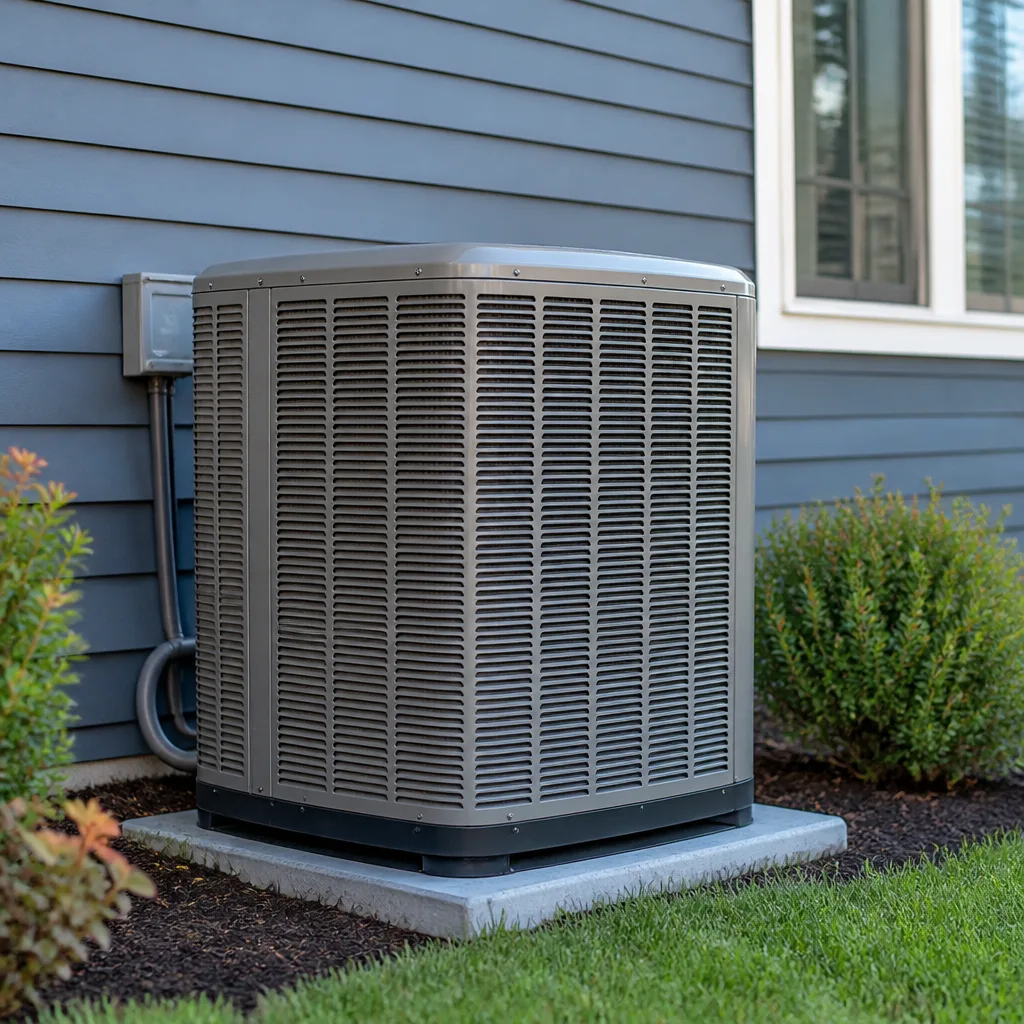
 Carrier
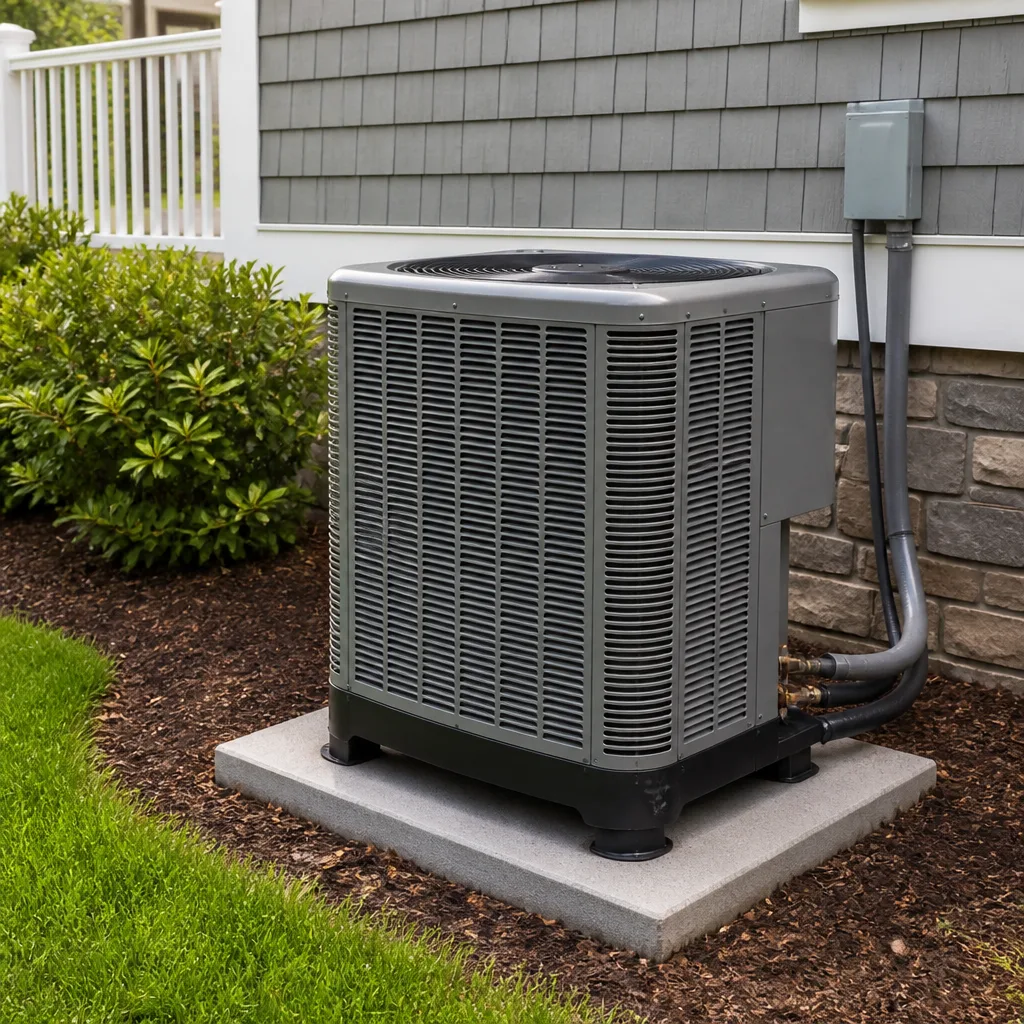 AC repair
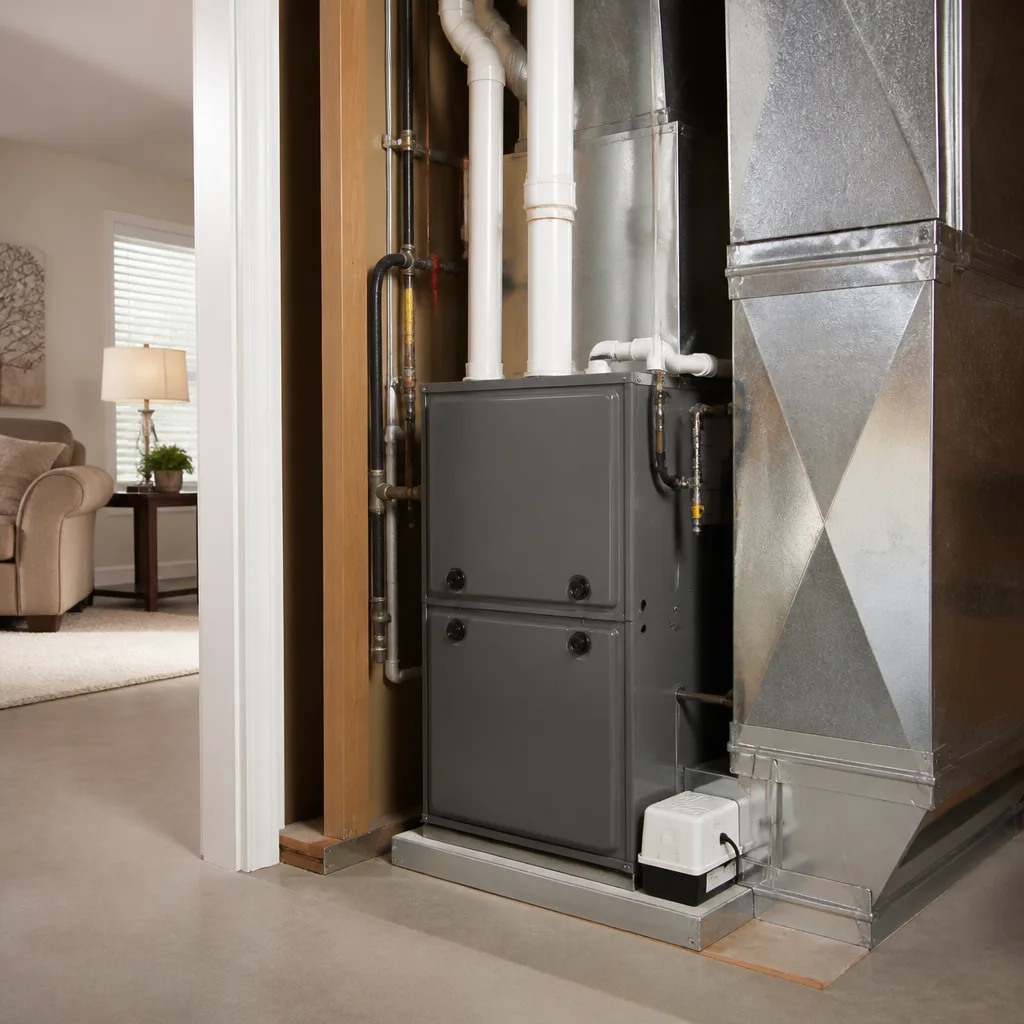 Furnace & heating
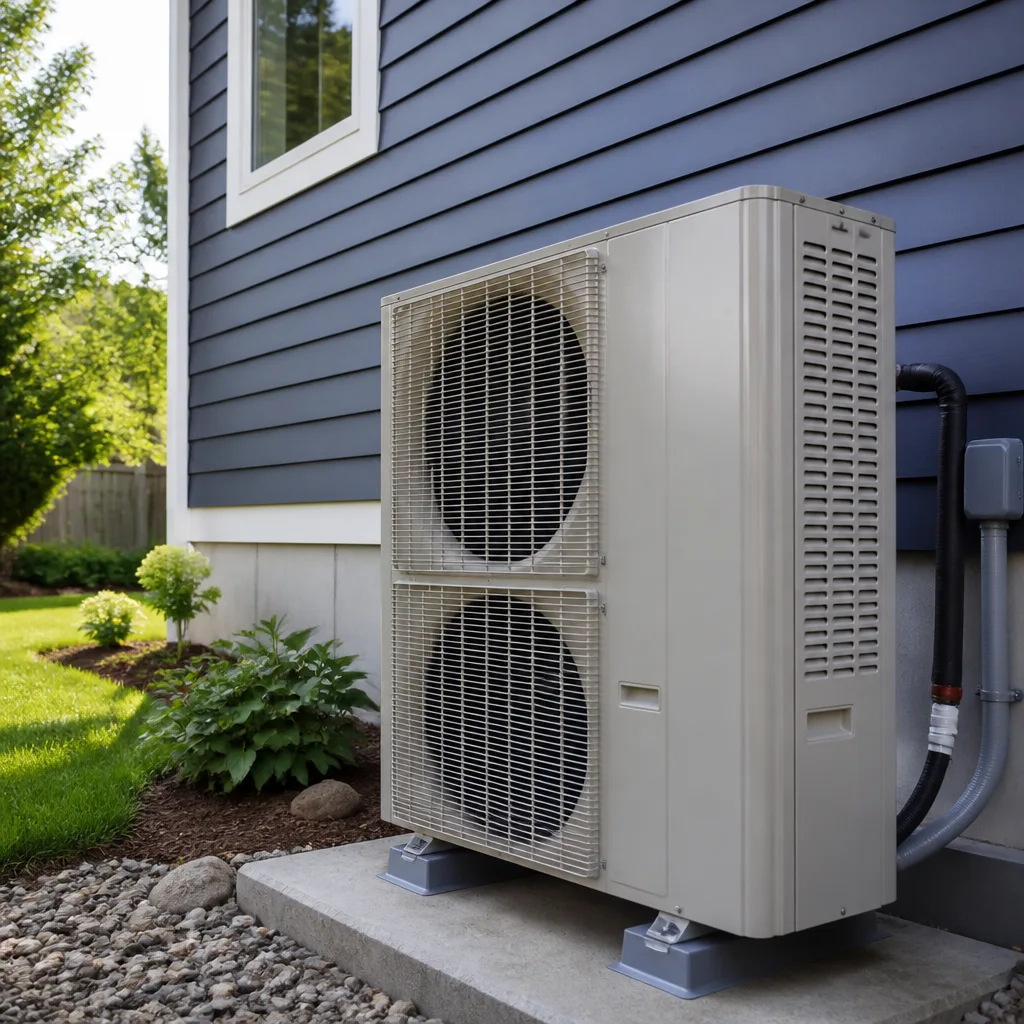 Heat pumps
 Ductless mini splits
 Trane
Trane Goodman
Seasonal tune-up and full diagnostic on your Carrier, Trane, or Goodman system - readings shown to you before any repair is proposed
Diagnosis first, numbers second - you approve the repair price before a single part goes in.
Get your free estimateCarrier Capacitor Replacement: The Marietta Owner’s Guide
If your Carrier air conditioner or heat pump won’t start, hums but won’t kick on, or the compressor shuts off after a few seconds, a failed capacitor is the likely culprit. We stock Carrier-compatible replacement capacitors on our trucks and install them the same day in most Marietta homes, with typical installed pricing running $150 – $350 parts and labor included. A capacitor is a small cylinder inside your outdoor condenser unit that stores and releases the electrical charge your compressor and fan motor need to start and keep running – when it fails, your system simply can’t do its job.
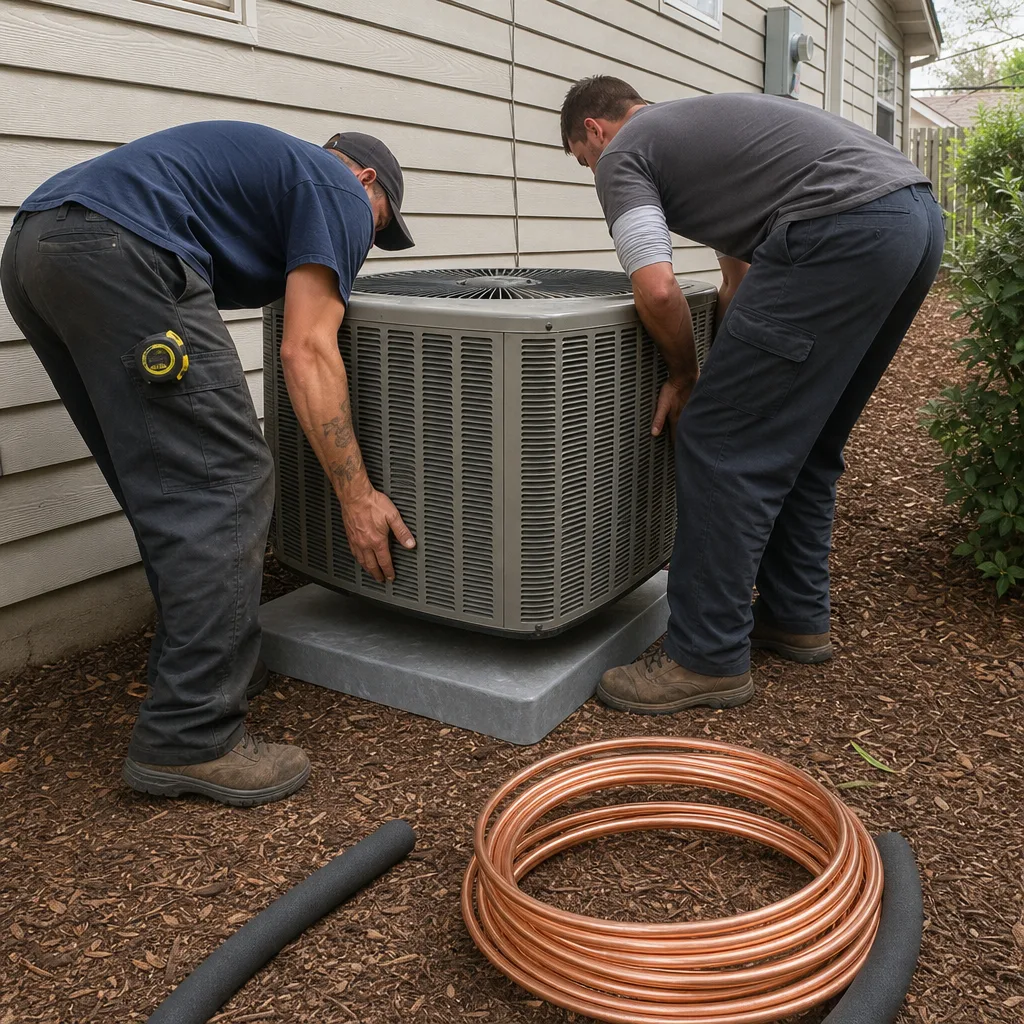
In Marietta’s summer heat, a failed capacitor usually announces itself at the worst possible moment. You come home on a July afternoon, the thermostat says 78 and climbing, and the outside unit is making a faint buzz or just sitting silent. Most homeowners don’t know the part exists until it stops working. We replace these constantly during the hot months, because Georgia heat ages capacitors faster than almost anything else in your system.
Key takeaways:
- Installed replacement cost in Marietta: $150 – $350, with most jobs falling around $200 – $275
- Same-day service is available and we carry common Carrier capacitor ratings on the truck
- You’ll get a written price before any work starts, and a written 365-day guarantee when we’re done
- This is an electrical component – the DIY risk is real, and we’ll explain exactly why below
Which Carrier Models This Applies To
Capacitors are not one-size-fits-all, and Carrier units use specific ratings that must match the original spec. We work on Carrier residential systems across the Comfort, Performance, and Infinity series – including the popular 24A, 24AC, 24AP, 25H, and 38 series models, as well as the higher-efficiency 24V and 25V Infinity lines found in many newer Marietta homes. Bryant and Payne models, which share Carrier’s engineering DNA, also fall under the same compatibility umbrella.
Every capacitor has two numbers printed on its metal casing that determine whether a replacement will work: a microfarad (µF) rating and a voltage rating, typically 370V or 440V. The microfarad value must match within plus or minus 5%, while a higher voltage rating is acceptable but a lower one is not. Carrier dual-run capacitors – the kind that serve both the compressor and the fan motor from a single can – are the ones we replace most often, and they typically range from 35/5 µF to 70/7.5 µF depending on your unit’s size and age. A single-run capacitor handles just one component. Using a capacitor with the wrong microfarad rating will shorten the life of your compressor, which is a far more expensive problem than the $30 – $80 part itself.
One compatibility gotcha we see regularly in Marietta: older Carrier units from the 1990s and early 2000s often used oval-shaped capacitors that mounted differently than the round cans used today. If you’ve got an older system and you’re comparing parts online, the physical shape and the bracket matter as much as the electrical specs. We also carry quality aftermarket equivalents – brands like AmRad and Titan – alongside genuine Carrier OEM parts. For most homeowners, a Tier-1 aftermarket capacitor with the same µF and voltage rating performs identically to the OEM part and costs 20 – 40% less. The honest trade-off: OEM parts carry the Carrier name but the aftermarket manufacturers are often the same factories that build the OEM components in the first place. We’ll show you both options with pricing before you decide.
Styles & brands we work with
Signs Your Carrier Capacitor Replacement Is Failing
- The outside unit hums but the fan doesn’t spin. This is the classic sign. The capacitor can’t deliver the starting jolt the fan motor needs, so electricity flows to the motor but nothing turns. The hum is the motor straining against a dead start circuit.
- The compressor shuts off after a few seconds. You hear the unit kick on, then it drops out and tries again a minute later. This short-cycling happens when a weak capacitor can’t keep sufficient voltage flowing to the compressor. Left alone, this pattern destroys compressors – a $2,500 repair versus a $250 capacitor.
- The air conditioner runs but blows warm air. If the capacitor only feeds the fan side and the compressor side has failed, the fan pulls air across dead coils. Your system looks like it’s working from inside the house, but the refrigerant never moves heat.
- A swollen or leaking capacitor case. Pop open the condenser panel and look at the capacitor. A healthy one is a clean, slightly domed cylinder. One that’s bulging at the top, sweating oil, or has a split seam has already failed internally – the dielectric fluid has overheated and expanded.
- Your energy bill spikes in a mild month. A weak capacitor forces motors to draw more current to accomplish the same work. If your June bill jumps before the real heat arrives, a failing capacitor in your Carrier system is a prime suspect.
If you’re seeing any of these, the fix is straightforward today. If you wait, the capacitor will take the compressor or fan motor down with it, and that’s a different conversation entirely.
See the difference
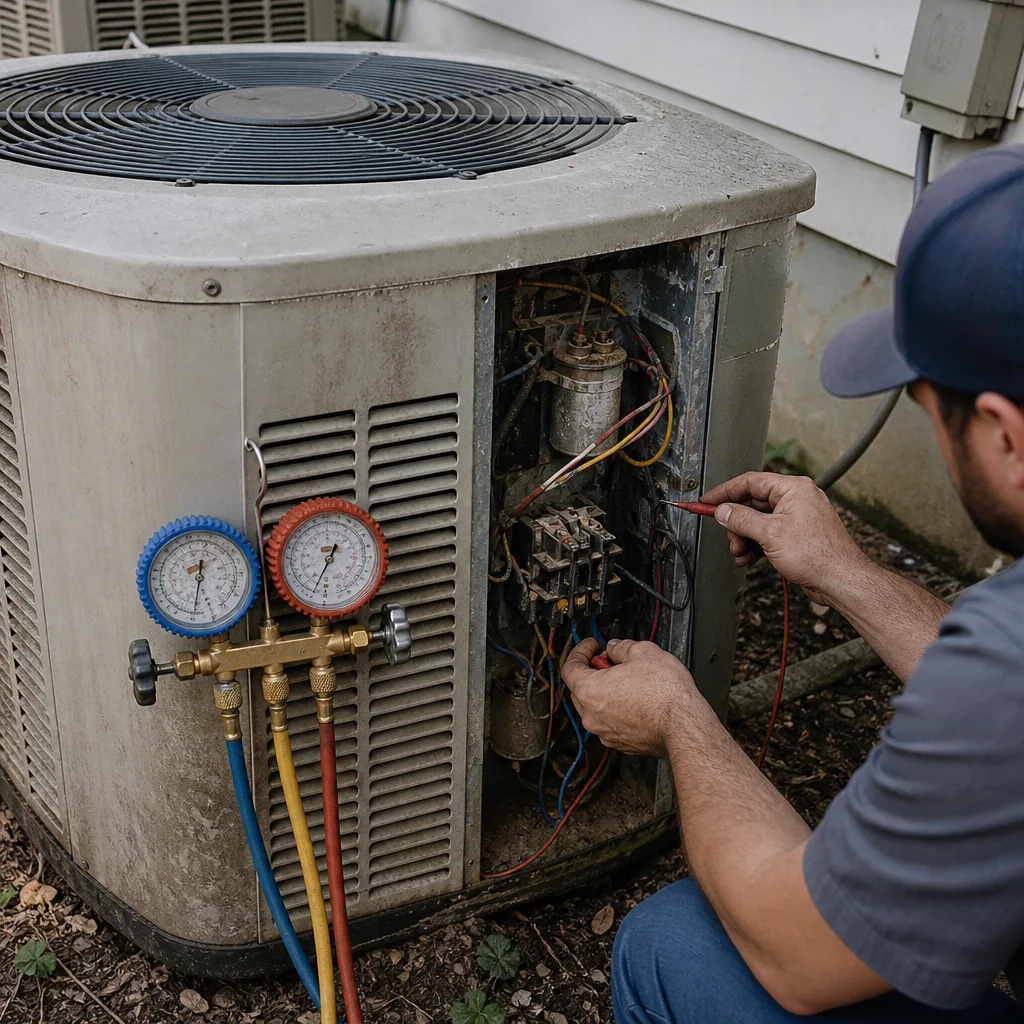 Before
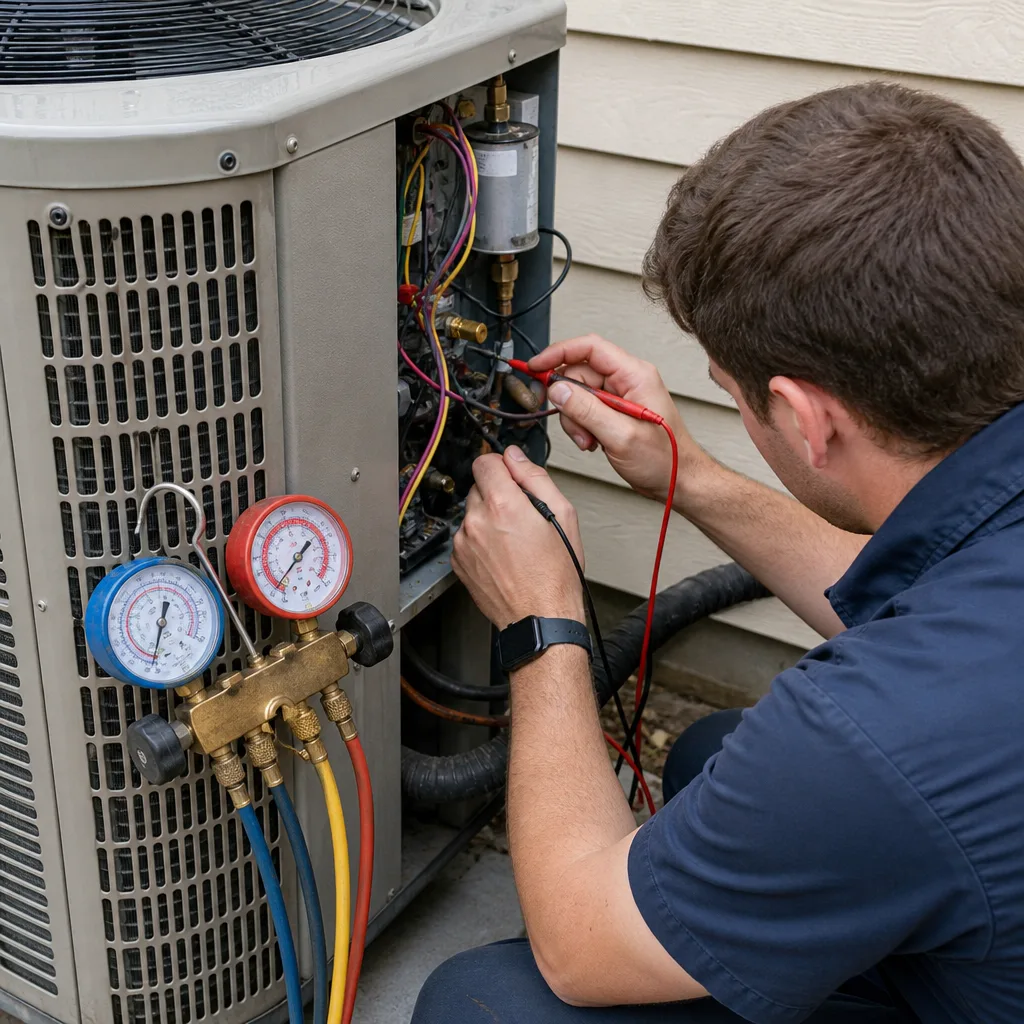 After
After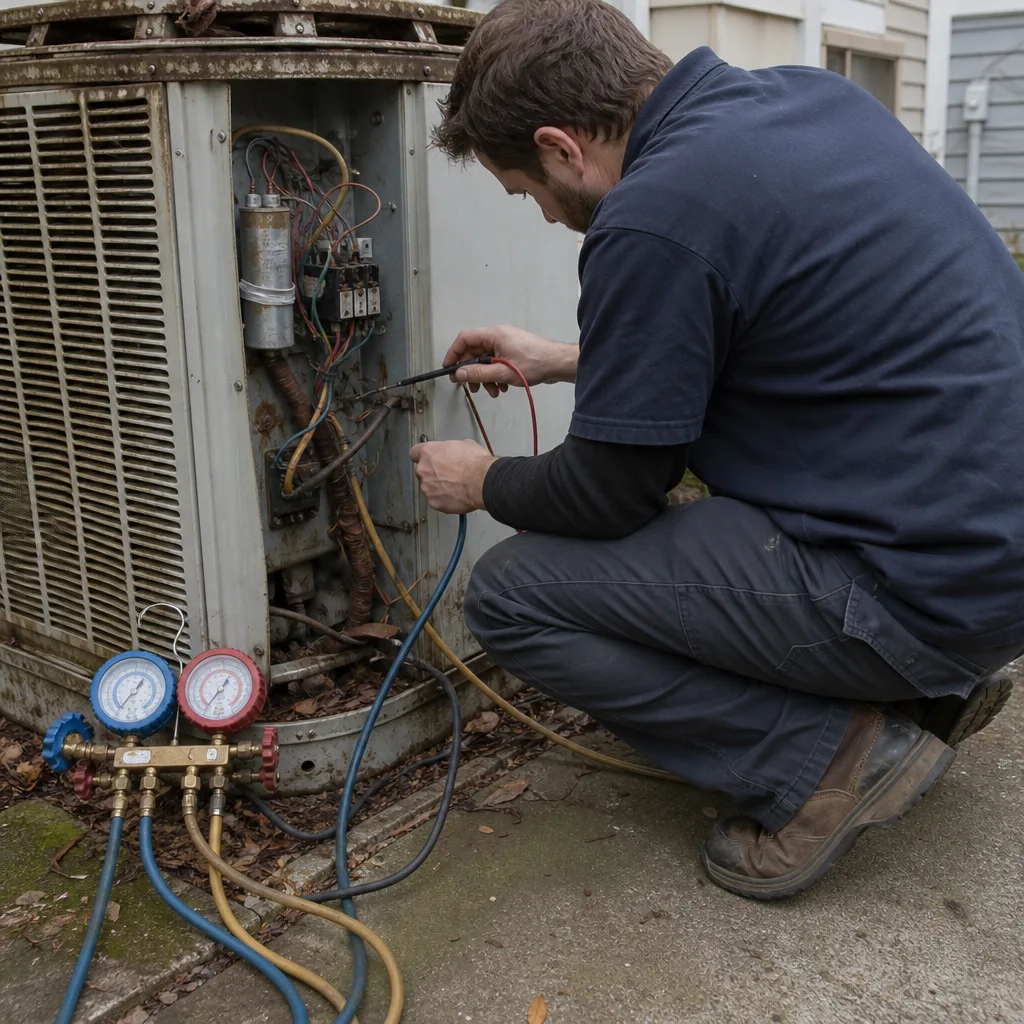 Before
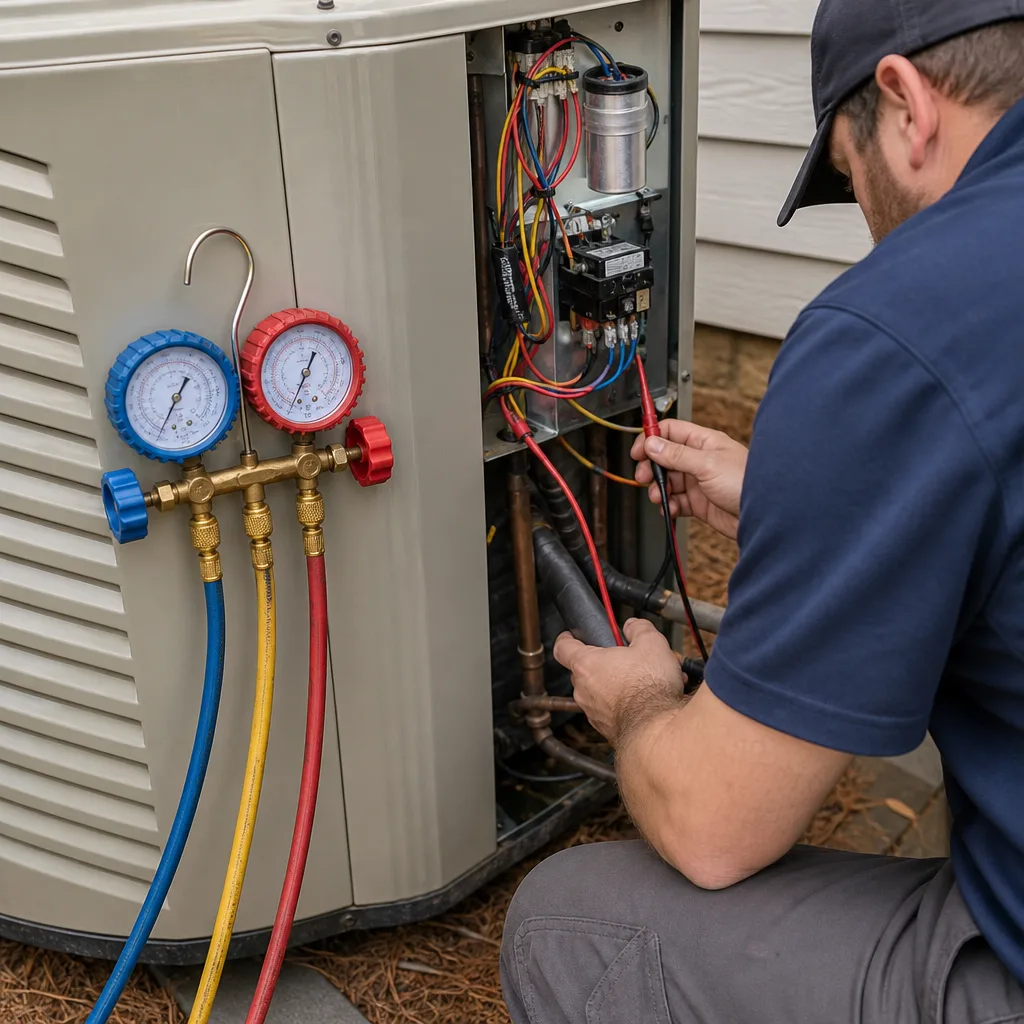 After
AfterReplacement Cost & What’s Included
For a Carrier capacitor replacement in Marietta, you’ll typically pay $150 – $350 installed. The capacitor itself runs $30 – $80 depending on whether we’re installing a single-run or dual-run unit and whether you choose OEM or aftermarket. The rest is labor, and most capacitor replacements take 30 – 60 minutes including diagnostic testing.
What moves the price within that range:
- Part type: Single-run capacitors are cheaper than dual-run. If your system uses two separate capacitors instead of one combined unit, you’re paying for two parts.
- Access: Most Carrier condenser units give us straightforward access to the electrical compartment. But if landscaping, fence lines, or deck framing pin the unit into a corner, the labor takes longer.
- System age: Older units sometimes have corroded wiring terminals or degraded connectors that need replacing alongside the capacitor – about $20 – $40 in additional parts.
- Brand choice: Genuine Carrier-branded capacitors cost more than Tier-1 aftermarket equivalents. We stock both and will show you the price difference before we start.
Every capacitor replacement we do in Marietta includes a diagnostic check to confirm the capacitor is the actual failure – not a symptom of a deeper electrical issue – and a written guarantee covering the part and our labor for 365 days. If that capacitor fails inside a year, we come back and replace it again at no charge under our 365-Day Done Right Promise. You’ll see the total price in writing before any work begins.
DIY or Call Us?
Here’s the straight answer: capacitors store enough electrical charge to hurt you badly even when the power is off. They’re designed to hold voltage, and a charged capacitor can discharge through your hand in an instant. If you don’t know how to safely identify and discharge the capacitor with insulated tools and a proper drain resistor, do not open that condenser panel. I’ve seen the results of a homeowner with a screwdriver and a YouTube video, and it’s not worth learning this lesson the hard way.
What you can safely check from outside: confirm your thermostat is calling for cooling, make sure the breaker hasn’t tripped, and look at the condenser panel without opening it – if it’s dented, rusted through, or obviously damaged, that’s useful information for us. You can also listen for the hum we described above. That’s the extent of safe DIY for this part. After that, call (478) 662-5175 and we’ll send a technician to you by name and photo before they ever knock on your door. You’ll know exactly who’s coming, and you’ll have a written price before a single tool comes out.
FAQs
In Marietta’s climate, a Carrier capacitor typically lasts 5 – 10 years, but we replace plenty of them at the 4 – 6 year mark because sustained heat exposure degrades the dielectric fluid inside the can faster than the manufacturer’s ideal-condition rating suggests. If your system runs constantly from May through September, plan on replacement closer to the 5-year end of that range. A capacitor that survives 10 Georgia summers is a good one.
No. A capacitor is a sealed component – once the internal dielectric fails, there’s no practical repair. The entire part gets replaced. The good news: it’s one of the least expensive parts in your Carrier system, and the swap usually takes under an hour including testing.
Most Carrier capacitor replacements in Marietta take 30 – 60 minutes from the time we open the condenser panel to the time we verify the system is running correctly. If we’re also diagnosing other issues or replacing corroded wiring terminals, budget up to 90 minutes. We’ll tell you the expected time before we start.
Yes. Our technicians carry common Carrier dual-run capacitor ratings – typically 35/5 µF through 70/7.5 µF at 370V and 440V – plus single-run replacements and quality aftermarket equivalents from AmRad and Titan. For most Marietta homes, we complete the repair in a single visit. If your unit needs an unusual spec we don’t have on board, our supplier has it same-day. Call (478) 662-5175 and we’ll tell you what we can do before we ever arrive.
Written by Devin Marlowe, Owner, Brandt HVAC Co Marietta at Brandt HVAC Co Marietta, serving Marietta and nearby areas.